Voltaire Quotes
But that a camel-merchant should stir up insurrection in his village; that in league with some miserable followers he persuades them that he talks with the angel Gabriel; that he boasts of having been carried to heaven, where he received in part this unintelligible book, each page of which makes common sense shudder; that, to pay homage to this book, he delivers his country to iron and flame; that he cuts the throats of fathers and kidnaps daughters; that he gives to the defeated the choice of his religion or death: this is assuredly nothing any man can excuse, at least if he was not born a Turk, or if superstition has not extinguished all natural light in him.
Voltaire had little respect for any organized religion, but found Islam particularly barbaric and absurd. However he was also very negative about Christianity. See {621191} . The Ottoman Empire, centered in Turkey, then controlled all the Islamic countries of the Middle East. Europeans then often referred to all Muslims as “Turks.”
Voltaire, 1694-1778, [Francois-Marie Arouet], French Historian & Dramatist, Negative view of Muhammad and Islam, Letter to Frederick II of Prussia, December 1740
Sourced by: Eigen's Political and Historical Quotations

This particular quotation was very damaging to Christians of the era. Voltaire was almost universally regarded as the greatest mind of Europe at the time. He was consulted by powerful monarchs and others throughout Europe. He influenced major figures of the day like Catherine the Great. Voltaire did believe in God. See {621200}.

In September of 2006 Pope Benedict XVI, quoted this statement in a lecture to theological students. There was much distress and protest among Muslim leaders.


The reason he claimed that Governor Taseer was a blasphemer was that the governor opposed death penalty for saying or writing anything that was heresy or blasphemy as interpreted be fundamentalist Muslims. The Governor knew he was taking a risk. See {620970} .


This quotation is often given by those who believe that nothing has really changed regarding the Arabs and non-Islamic Westerners in the last century. While the support of dictators, Israel and support for that democracy, the artificial Western imposed borders, 9-11, or the Iraq war is often cited as the cause of Arab hostility and murderous aggression, as this quotation demonstrates, the problems and attitudes and behaviors existed long before any of these occurred. The borders were not set until after WWI and all the other causes occurred almost 50 years later, Yet there was still the propensity for fanaticism and violence. Sikes actually was one of those who was to determine the Arab borders, making one of the first “suggested” maps of the area for the English.


In September of 2005 a Danish Newspaper published some political cartoons showing the hypocrisy of some Muslims who use Islam to justify murder of innocents and terrorism. Many in the Middle East protested vehemently because the Prophet Muhammad's visage was depicted against Islamic tradition. Many Muslim leaders claimed that insulting religion was an “abuse” of freedom of speech including those from nations which regularly publish material that is virulent against Christians and Jews. Momani reprinted the cartoons and wrote this editorial arguing that the cartoons insulted Islam far less than the terrorism and murder—especially a recent murder of Muslims in Amman attending an Islamic wedding ceremony, He was fired by the newspaper owners and then actually arrested by the Jordanian authorities for “Insulting Religion.”

Son of Reverend Billy Graham. The statement was made in the aftermath of September 11.

This statement of the Prophet is often quoted by Yusuf al-Qaradawi and other moderate, modernist Islamic clerics and leaders urging people to eschew terrorism and Muslim fundamentalist extremism.


This quotation illustrates that the Muslim conquest and attempt to destroy and desecrate the symbols of other religions was not limited to Christianity—it was ALL other religions. In that sense, Christianity and Islam of the period were very similar at the time—intolerance to the point of murder and destruction of any “heathen” religion.


The report was praised by some of the intellectuals of Pakistan and most of the non-Islamic world. However, Pakistan the discussion of each of the cleavages, instigated the public passion of the cleavage and nothing significant was done.

Slogans taken from posters listing 10 people targeted by Muslim extremists. Most were people who had said or published material that some fundamentalist Muslims had decided were offensive to Islam. One was Charlie Hebdo, the French Publisher who Islamic terrorists murdered later. Note the Americanisms that the terrorist propagandists adopted. The Wanted Dead or Alive was taken from the posters of the American West of the 19th century. The "Yes we can" was lifted from the Barack Obama 2008 campaign slogan. The "Bullet A Day Keeps the Infidel Away" is a takeoff on the American saying "An apple a day keeps the Doctor away." One of the reasons for these Americanisms was that the founding editor was Samir Khan, self-described American traitor.


The Nazis and most of the Arabs were allies in WWII. The Jews of Palestine—although they were opposed to many of the British policies regarding Palestine—were active in the Allied cause contributing units to the British Army. Although the Germans were brutal to civilians, murdering millions, they refrained from public pronouncements or exhortations to kill civilians in most cases. The Arabs did not. The Mufti was actually given the rank of General in the Nazi SS and had his own SS unit. In this despicable exhortation he actually uses a concept and wording from the Koran. See {584355}. This quotation is important in that it refutes a common claim by some Palestinians that it was only the Germans who were responsible for the Holocaust and the post war Jewish Refugee problem and that the Palestinians had to bear the price rather than place Israel in Europe. This quotation and the other by the Grand Mufti prove that Palestinians were not only complicit in persecution of Jews but took a leadership and advocacy role.

Some of the Prophet’s followers by modern standards were very violent and urged attacks on innocent people in order to intimidate others. He was expelled from his Egyptian university and arrested, tried and found guilty of “holding religion in contempt”. Which is a crime in most Islamic countries. He also “insulted” the President. He is the first blogger to have been jailed in Egypt for the contents of his blog. See {585058}.
Few Islamic leaders have publicly made such unequivocal statements about the problem of extremism and fanaticism.


This quotation is one of history’s great examples of the classic problem of quotes taken out of context. The Blog was dealing with the potential reactions if Islamic terrorists set off a nuclear device or a radioactive dirty bomb in the United States. Lowry was reporting that in the event of a retaliation there was then a considerable amount of sentiment for attacking Mecca, the holy city of Islam. However, the Arab press picked up Lowry’s quote and Muslims throughout the world were told that the Editor of a prestigious American Journal admitted that there was much American public sentiment for a nuclear attack on Islam’s holiest city. By the time this “fact” was spread by word of mouth, a huge proportion of Muslims the world over truly believed that America was indeed out to destroy Islam. The fact that the “sentiment” was only in the context of a hypothetical retaliation for a first nuclear strike was totally lost by the time it reached most Muslims.
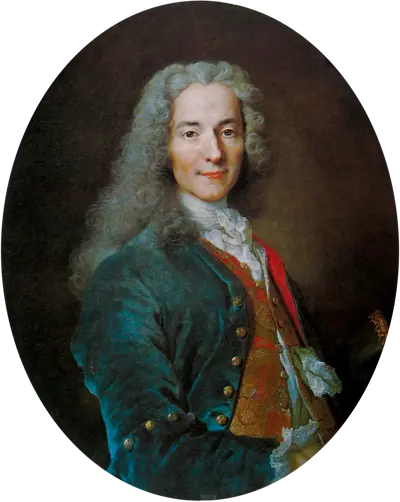
- Born: November 21, 1694
- Died: May 30, 1778
- Nationality: French
- Profession: Writer, Philosopher
François-Marie Arouet, known by his nom de plume Voltaire (/vɒlˈtɛər, voʊl-/; also US: /vɔːl-/; French: [vɔltɛːʁ]), was a French Enlightenment writer, historian, and philosopher famous for his wit, his criticism of Christianity—especially the Roman Catholic Church—as well as his advocacy of freedom of speech, freedom of religion, and separation of church and state.
