Randolph Bourne Quotes
… we shall have to accept, I think, that free and mobile passage of the immigrant between America and his native land again which now arouses so much prejudice among us. We shall have to accept the immigrant's return for the same reason that we consider justified our own flitting about the earth. To stigmatize the alien who works in America for a few years and returns to his own land, only perhaps to seek American fortune again, is to think in narrow nationalistic terms. It is to ignore the cosmopolitan significance of this migration. It is to ignore the fact that the returning immigrant is often a missionary to an inferior civilization.
Randolph Bourne, 1886–1918, Social & Political Essayist, “Trans-National America”, The Atlantic Monthly, July 1916
Sourced by: Eigen's Political and Historical Quotations


The Congressman represented a heavily Italian district that was very ambivalent about fighting for America in World War I. He addressed his constituents.

The great physicist was asked if he believed in extra-terrestrials. Fermi was the scientist who organized and planned the first controlled nuclear chain reaction


In revolutionary America, not only were the colonists divided into revolutionists and loyalists to Britain, but among the revolutionists, there was no uniformity of manners, ideas, norms, beliefs or any other element of politics and unity. The great challenge to America and one of its great strengths is its diversity which is not a consequence of recent immigration, but has been a characteristic of the American body politic even in the Revolutionary War. Even English was not spoken by everyone as there were French, German, Scandinavian and other immigrants who had settled in the frontier and rarely came into contact with people other than those of their own family and community. The notion of a specific American culture to which which some today believe that we should return, never existed to begin with.

Internal population movement was tightly controlled in China for fear that the huge body of rural peasants would swamp, seeking economic opportunity, the cities. In 2000 the Chinese were debating the wisdom of this policy. See Mau Yushi. “Rice Bowl” is a Chinese euphemistically used to mean “job and and a standard of living.”

Quintus Horatius Flaccus
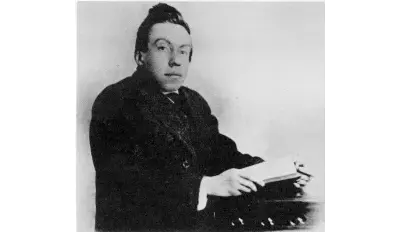
Randolph Silliman Bourne was a progressive writer and intellectual born in Bloomfield, New Jersey, and a graduate of Columbia University. He is considered to be a spokesman for the young radicals living during World War I. His articles appeared in journals including The Seven Arts and The New Republic. Bourne is best known for his essays, especially his unfinished work "The State," discovered after he died. The essay is the source of the well-known phrase "war is the health of the state," by which Bourne lamented governments' success at arrogating authority and resources during conflicts.
