John C. Calhoun Quotes
We ought not to forget that the government, through all its departments, judicial as well as others, is administered by delegated and responsible agents; and that the power which really controls, ultimately, all the movements, is not in the agents, but those who elect or appoint them.
Calhoun, John C. A Disquisition on Government. Edited by Richard K. Crallé, A.S. Johnston, 1851.


The three "estates" were the Lords Spiritual (Clergy), Lords Temporal (Aristocracy) and the Commons. The other three estates have been forgotten, but the press is still known as the "fourth estate." See Emanuel Sieyes, s.v. "Voters and Voting," on the Third Estate


There are many factors that tend to make it very hard for Cabinit Secrretaries and other Presidencial appointments to control their agencies. They include inertia, the huge size of many agencies, existing laws, bureaucracies, and the techncial complexity of the work of the agency. Like a huge aircraft carrier, when they can make a change it takes a while for the change to occur and be noticable--typically more time than the average cabinet member is in office. This is much like CEOs of very large corporations.


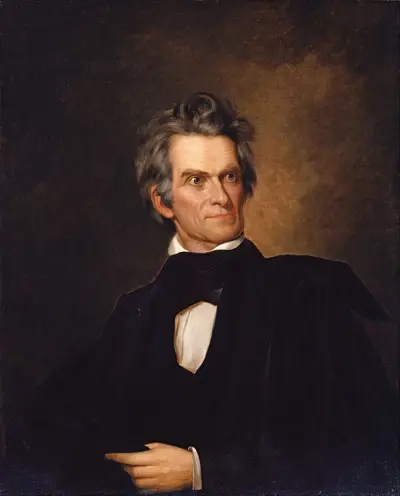
John Caldwell Calhoun was an American politician and political theorist from South Carolina who held many important positions including being the seventh vice president of the United States from 1825 to 1832, while adamantly defending slavery and protecting the interests of the white South when its residents were outnumbered by Northerners. He began his political career as a nationalist, modernizer, and proponent of a strong national government and protective tariffs. In the late 1820s, his views changed radically, and he became a leading proponent of states' rights, limited government, nullification, and opposition to high tariffs. He saw Northern acceptance of those policies as a condition of the South remaining in the Union. His beliefs and warnings heavily influenced the South's secession from the Union in 1860–1861.
