Helen Keller Quotes
We have prayed, we have coaxed, we have begged, for the vote, with the hope that men, out of chivalry, would bestow equal rights upon women and take them into partnership in the affairs of the state. We hoped that their common sense would triumph over prejudices and stupidity. We thought their boasted sense of justice would overcome the errors that so often fetter the human spirit; but we have always gone away empty handed. We shall beg no more.
Keller, Helen. Out of the Dark: Essays, Letters, and Addresses on Physical and Social Vision. Garden City, NY: Doubleday, Page & Company, 1913.


This was more than 30 years earlier than the United States.

The editorial was in support of women’s suffrage—the right to vote which at the time women did not have in Britain. Women were very active in protests and demonstrations. Tactics sometimes involved civil disobedience and chaining themselves to public buildings. It was the civil disobedience and disruptions that the newspaper referred to as the “follies and excesses.” In retrospect today, it is amazing how threatened the society felt and how they reacted to the “threat” of females voting. It does however give us a perspective on those contemporary societies which restrict women’s voting rights.


This was de facto Equal Rights legislation.


Miller was the first Black American admitted to a Graduate Program—Johns Hopkins—in Mathematics. Women were not then universally allowed to vote and suffrage was a major issue. Miller, like many Black males, was opposed to female suffrage. The prospect of many women holding public office was to him so absurd that the potential prospect was sufficient to oppose women voting.

Although born and educated in the United States, she lived mostly in England and was politically active there.


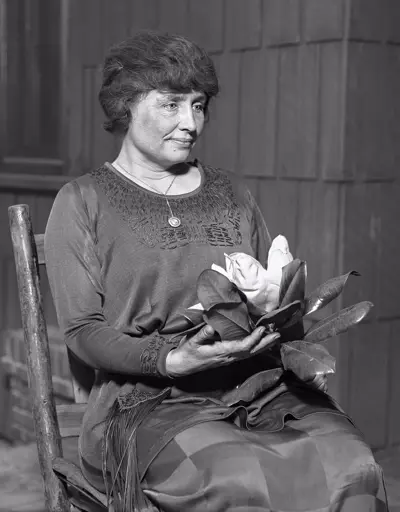
Helen Adams Keller was an American author, disability rights advocate, political activist and lecturer. Born in West Tuscumbia, Alabama, she lost her sight and hearing after a bout of illness at the age of nineteen months. She then communicated primarily using home signs until the age of seven when she met her first teacher and life-long companion Anne Sullivan, who taught her language, including reading and writing; Sullivan's first lessons involved spelling words on Keller's hand to show her the names of objects around her. She also learned how to speak and to understand other people's speech using the Tadoma method. After an education at both specialist and mainstream schools, she attended Radcliffe College of Harvard University and became the first deafblind person to earn a Bachelor of Arts degree. She worked for the American Foundation for the Blind (AFB) from 1924 until 1968, during which time she toured the United States and traveled to 39 countries around the globe advocating for those with vision loss.
