Andrew Sterett Quotes
We have not had a man wounded, and we have sustained no material damage to our hull or rigging.
This was a very significant battle. The Barbary states had navies of corsairs who were very experienced in battle. The new United States barely had a navy and the Enterprise was just an armed schooner. When the Enterprise sighted the Tripoli, many in the crew thought that the American ship would run. The schooner was badly outgunned by the warship and just as badly outmanned. And the Tripoli sailors were battle hardened while the Americans had little battle experience. Yet Sterett not only attacked, but won one of the most one sided sea battles in which the United States has ever engaged. There were NO casualties for the Enterprise while half the Tripolitan crew was killed and the other half wounded. The Americans while not battle hardened were great sailors and they outmaneuvered the Tripoli and cut their rigging to pieces with very accurate gunnery. One reason that this quotation is so important is that it made the Americans realize that Americans could not only hold their own, but could defeat the Barbary corsairs even when outgunned and out manned. This created much confidence in President Jefferson and the other American leaders of the time. This Enterprise was the first of 4 American ships that would bear that name.
Andrew Sterett, 1778–1807, Naval Officer & Captain of the USS Enterprise, Battle Report in the first U. S. Naval battle in the Barbary War, August 1, 1801
Sourced by: Eigen's Political and Historical Quotations

In the 18th Century, the Islamic Barbary States combined their religious beliefs for Jihad against non believers with a classic criminal enterprise. They would authorize cosairs to outfit ships and attack Christian merchant ships on the high seas. They would capture the ship and the cargo, which would be split with the ruler of the country. The crew and passengers would by “rented out” as slaves until they would be ransomed, the proceeds of which would also be shared. To motivate a larger ransom, the captives were regularly tortured as well as worked almost to death. The Barbary Pirates encouraged the “slaves” to write to their relatives, friends and governments to try and raise the ransom. O’Brien’s ship was captured in 1785. He had been a slave for 4 years when he wrote this. See {623704} for a quote from a letter he sent Congress. Finally, after 10 years, O’Brien and those of his crew that were still alive were finally freed. O’Brien’s unusual experience and knowledge of the Barbary States qualified him as an expert and he was then appointed Consul-General to Algiers. Individual Christian countries were offered a “treaty” whereby for an annual payment of tribute to the Barbary country, the corsairs of that country would not attack ships flying their flag. The Christian country had to make 4 different tribute payments to each of the Barbary nations. Most of the European powers were paying the tribute even though some could easily defeat the Corsair navies in a war. The cost of outfitting a fleet for war was much more costly than paying the tribute. The new nation of the United States was good pickings for the Barbary pilots and there was a period of several decades where the Americans had to create a policy to pay tribute or go to war. At different times America did both.
In the 18th Century, the Islamic Barbary States combined their religious beliefs for Jihad against non believers with a classic criminal enterprise. They would authorize cosairs to outfit ships and attack Christian merchant ships on the high seas. They would capture the ship and the cargo, which would be split with the ruler of the country. The crew and passengers would by “rented out” as slaves until they would be ransomed, the proceeds of which would also be shared. To motivate a larger ransom, the captives were regularly tortured as well as worked almost to death. The Barbary Pirates encouraged the “slaves” to write to their relatives, friends and governments to try and raise the ransom. O’Brien’s ship was captured in 1785. He had been a slave for 4 years when he wrote this. See for a quote from a letter he sent Congress. Finally, after 10 years, O’Brien and those of his crew that were still alive were finally freed. O’Brien’s unusual experience and knowledge of the Barbary States qualified him as an expert and he was then appointed Consul-General to Algiers. Individual Christian countries were offered a “treaty” whereby for an annual payment of tribute to the Barbary country, the corsairs of that country would not attack ships flying their flag. The Christian country had to make 4 different tribute payments to each of the Barbary nations. Most of the European powers were paying the tribute even though some could easily defeat the Corsair navies in a war. The cost of outfitting a fleet for war was much more costly than paying the tribute. The new nation of the United States was good pickings for the Barbary pilots and there was a period of several decades where the Americans had to create a policy to pay tribute or go to war. At different times America did both.


The prisoners would be beaten and cut with swords. If they fell down, they would be bayoneted or beheaded as shown in the graphic—an actual photograph of the time.

Milosevic was explaining the events that led to civil war in Yugoslavia

This quotation was the beginning of a struggle between Congress and the Presidency over war powers. In this case, President Jefferson had sent a squadron of American ships to protect American Shipping from Arab Corsairs who preyed on shipping and captured crews and passengers of all nations to hold for ransom or put into slavery. The American ships, instead of only providing defense, attacked some of the ships of the Bey and freed a captured American frigate and crew. Jefferson acknowledged that the act was a grey area and asked for authority more authority for the Executive Branch to initiate action. The balance of authority for war and/or defense has been struggled over ever since.

In 1786 the Barbary Pirates demanded bribes so as not to seize American ships. England and France customarily paid the bribes. Thomas Jefferson proposed to build a navy and attack the pirates. However, there was no American navy at the time, Adams counseled a different course and in January of 1787 they signed a “pact” with Morocco whereby America paid for protection.


The same sentiment has been attributed to Aristotle.


The American Indian protection assurances from demagogues and ghost dancers, had a parallel among the white Afrikaners. Many who believed him died from bullet wounds.

On October 31, 1803, Tripolitan forces captured the ship Philadelphia and imprisoned the whole crew. The Pasha (provincial governor) of Tripoli, Yusef Karamanli demanded that the United States not only pay a ransom for the prisoners but an annual tribute to Tripoli.

Nearly two years after Tripoli had declared war against the United States, the U.S., after much deliberation, decided to stop negotiating a tribute settlement with Tripoli. The U.S. launched their attack on June 11, 1803 in what would be the first amphibious operation on the Barbary Coast. After witnessing the operation, the Pasha was unmoved. Piracy and war was a way of life for the Barbary states.
Response to an offer by Commodore Preble to exchange prisoners.

In February of 1804, Commodore Edward Preble staged a risky operation in order to prevent the Islamic Barbary powers from using one of the American captured ships against America. With a small band of naval officers he raided the heavily defended harbor in Tripoli and successfully destroyed the ship. Following the incident, Preble and his men were hailed as heroes at home and abroad for “humbling the Muslim North African states”. The clash of Christian and Islamic civilizations was then ongoing.

At the time, the Muslim nations of the Barbary Coast commonly seized merchant ships anywhere in the Mediterranean and other oceans. They would sell the cargos, enslave the Christian crews and passengers and then demand ransom for the ships and the freedom of the slaves. However, if nations paid each of the rulers of three countries--Morocco, Algeria & Tunisia--enough annual tribute, ships of the paying nation would not be molested. The European Maritime powers paid the tribute rather than go to war. However, this became a political controversy in the U.S. John Adams and many others wanted to pay the tribute. Jefferson and still others, argued that such tribute should never be paid and war was preferable. This treaty, negotiated by Donaldson and the Algerian Ruler, was a great victory for Jefferson as no tribute would be paid by the U. S.—the only country so exempted. However, it took an invasion of Tripoli lead by U.S. Marines and a massive naval bombardment of Algiers to ‘persuade’ the ruler of Algeria to sign the treaty. Later, the Barbary pirates reneged, and the U. S. did pay a tribute rather than have another war. They did however, pay less than the European powers.


Even in democratic America, this has been true. We spend almost any amount of money to give our military the weapons of war that will make them more effective soldiers, but when they return with mental and physical wounds, government money is not so easy to come by to preserve them in good health. Cost is a major consideration in Veterans benefits and care, but weapons expenditures have little restraint. It has been so for many years in many cultures.

This quotation was reported to Congress by Thomas Jefferson. Essentially, this religious justification is no different from that made by contemporary Islamic extremists. Particularly interesting is the last sentence. The Koran states that all Muslims who die defending Islam will go immediately to heaven regardless of their previous sins and transgressions. Under that justification, even criminal extortion and terrorism is justified by some Muslims whenever the victims are non-believers.
In the 18th Century, the Islamic Barbary States combined their religious beliefs for Jihad against non-believers with a classic criminal enterprise--piracy. They would authorize corsairs to outfit ships and attack Christian merchant ships on the high seas. They would capture the ship and the cargo, which would be split with the ruler of the country. The crew and passengers would by “rented out” as slaves until they would be ransomed, the proceeds of which would also be shared. To motivate a larger ransom, the captives were regularly tortured as well as worked almost to death. The Barbary Pirates encouraged the “slaves” to write to their relatives, friends and governments to try and raise the ransom. Individual Christian countries were offered a “treaty” whereby for an annual payment of tribute to the Barbary country, the corsairs of that country would not attack ships flying the flag of the country that paid the tribute. The Christian country had to make 4 different tribute payments to each of the 4 Barbary nations. Most of the European powers were paying the tribute even though some could easily defeat the Corsair navies in a war. The cost of outfitting a fleet for war was much more greater than paying the tribute. The new nation of the United States was good pickings for the Barbary pirates and there was a period of several decades where the Americans had to create a policy to pay tribute or go to war. At different times America did both. Jefferson argued for War rather than pay the blackmail tribute.
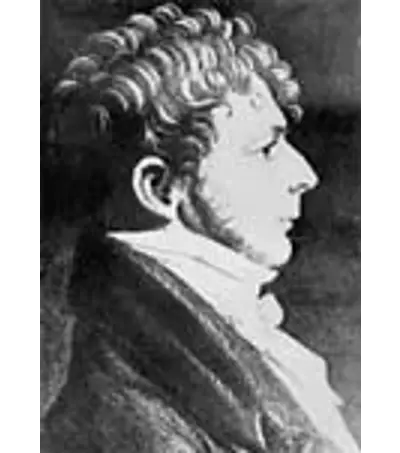
Andrew Sterett was an officer in the United States Navy during the nation's early days. He saw combat during the Quasi-War with France and in the Barbary Wars, commanding the schooner USS Enterprise in both conflicts.
