Arnold J. Toynbee Quotes
We have been God-like in our planned breeding of our domesticated plants and animals, but we have been rabbit-like in our unplanned breeding of ourselves.
Toynbee, Arnold J. Experiences. Oxford University Press, 1969.

40 years later, it was clear that he was correct about the possibility of man directing his own evolutionary future. It was also clear that man was doing just that by his effect on his own ecosphere and other humans. However Beadle envisioned an intentional planned set of actions, taken by society as a whole. However, in most counties the political system has not been very facile at examining the alternatives with the advice of scientists. In the United States about half of the politicians reject the information provided by the overwhelming majority of the scientists, and the great challenge was whether in the future man will knowingly and with forethought affect his evolution or with ignorance and unintended consequence will do so.

Actually, while such selective breeding is possible in all animals, the selection for a single trait almost always produces other unintended and unanticipated traits and these could be devastating to the “new generation”, unpleasant, benign, or anything else. At the time selective breeding was the only possible tool to produce “desirable” traits in an animal or to eliminate what someone things of as “undesirable” traits. Today, our understanding of the human genome and genetic engineering offers a much more reliable possibility of affecting animal traits without as many risks of random and unintended consequences that are present with breeding.


The logic is that communities and areas—even countries have finite resources. Since we have a welfare society in which we will not allow people to starve, society must provide for children whose parents cannot. Therefore, individuals ought not to be allowed to breed beyond their ability to care for the children for if many would do so, the capacity of the community could be overwhelmed. A middle ground is that while the final decision should be left to the individual family, the society ought to educate and persuade members to limit their breeding.

This quote was the beginning of the now discredited Eugenics movement. The essential problems were twofold: One was that someone had to decide which characteristics were desirable and undesirable, and there is wide difference of opinion that there is no way of resolving. Genocide is the result of Eugenics taken to extremes. Second, it the issue of human rights. No person, organization, or government has the right to tell a particular individual what genetic characteristics he/she may have with his/her children. Note that the issue of Population Control for size was also a part of the early Eugenics movement but is a totally separate issue. It is the voluntary verses the compulsory nature of Population control the is the critical ethical element.
He and others have already done it. Joyce's lab at the Scripps Research Institute was the first to produce a self-replicating in vitro system, capable of exponential growth and continuing evolution, composed entirely of RNA enzymes. Most politicians do not understand much about evolution and many actually believe that evolution has not been proven an is not what governs the development of species. And at some point these men and women will have to come to grips with this scientific reality and decide what if any restrictions there should be on the human control and manipulation of the evolution of different species.

What he thought was conceivable in the 1970’s seemed almost certain to come to pass 30 years later. Scientists had already altered the evolution of various plants and animals, and the complete human genome had been sequenced. The question will be not whether man will be able to control and modify his own evolution, but how should this be done and who should decide it. We have realized that man has already—unintentionally—altered the evolution of many species from passenger pigeons which are now extinct and the dog which coevolved with humans. Arguably, man’s development of the ability to control his own evolution is an evolutionary development itself. One great question for society is whether it is better to alter evolution unknowingly or in a planned, relatively controlled manner. For man to participate in the design of human evolution will be the nightmare of the Creationists who insist that evolution is too complicated to be somewhat of a random process and that there must be a designer who they assume is God. When man becomes the designer, that will be very disturbing. For most theologians, there will be little difficulty with the notion that God chose the mechanism of evolution and chose humans to give the intellect and knowledge to implement and design the evolutionary process.

There was a substantial movement to prevent mentally defective and people of low intelligence from being able to reproduce. Over 20 states, with the approval of the then Supreme Court performed forced state sterilizations. Of course the then definition of “degenerates” changed from state to state. A century later, American values changed so much that there is no state that would even consider involuntary sterilization and if they did, the Courts would hold it un-Constitutional.
This pseudo-scientific organization, in spite of the junk science it was promulgating, actually had a substantial American following and over 20 states actually passed laws to allow forced sterilization who were “UNFIT”. In reality while there is a genetic component to each of the examples it only increases the probabilities and is not determinative. And even f it were and there were selective breeding of humans, these “TRAITS” would not be eliminated in 3 generations,


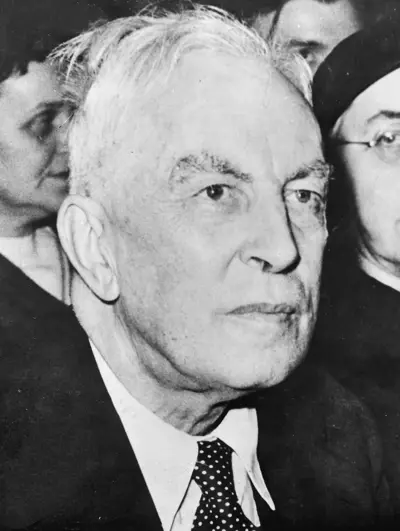
Arnold Joseph Toynbee CH FBA was a British historian, a philosopher of history, an author of numerous books and a research professor of international history at the London School of Economics and King's College London. From 1918 to 1950, Toynbee was considered a leading specialist on international affairs.
