George Wells Beadle Quotes
Knowing what we now know about living systems—how they replicate and how they mutate—we are beginning to know how to control their evolutionary futures. To a considerable extent we now do that with the plants we cultivate and the animals we domesticate. This is, in fact, a standard application of genetics today. We could even go further, for there is no reason why we cannot in the same way direct our own evolutionary futures. I wish to emphasize, however—and emphatically—that whether we should do this and, if so, how, are not questions science alone can answer. They are for society as a whole to think about. Scientists can say what the consequences might be, but they are not justified in going further except as responsible members of society.
40 years later, it was clear that he was correct about the possibility of man directing his own evolutionary future. It was also clear that man was doing just that by his effect on his own ecosphere and other humans. However Beadle envisioned an intentional planned set of actions, taken by society as a whole. However, in most counties the political system has not been very facile at examining the alternatives with the advice of scientists. In the United States about half of the politicians reject the information provided by the overwhelming majority of the scientists, and the great challenge was whether in the future man will knowingly and with forethought affect his evolution or with ignorance and unintended consequence will do so.
George Wells Beadle, 1903-1989, Geneticist, The Place of Genetics in Modern Biology, 1959
Sourced by: Eigen's Political and Historical Quotations

Gore who generally was a progressive on almost all issues, was quite conservative when it came to human genetic manipulation and cloning. Scientists for whom Gore was a favorite politician based on his leadership of digital technology and the Internet and his Nobel prize winning work on environmentalism, but his stance in this quotation was puzzling to many.


This was written over 2 decades before Dolly the sheep was first cloned. Since his call for a societal public discussion about cloning, there has been very little, but by the 21st century there had been just a few hasty, ill-informed, almost hysterical efforts to legislate on the subject.
He and others have already done it. Joyce's lab at the Scripps Research Institute was the first to produce a self-replicating in vitro system, capable of exponential growth and continuing evolution, composed entirely of RNA enzymes. Most politicians do not understand much about evolution and many actually believe that evolution has not been proven an is not what governs the development of species. And at some point these men and women will have to come to grips with this scientific reality and decide what if any restrictions there should be on the human control and manipulation of the evolution of different species.


He was commenting on a proposal many in public health were making of using modern technology, genetic and chemical, to wipe out the mosquito population and thereby eliminate Zika and Malaria, along with other mosquito carried diseases which do terrible damage to humans worldwide. There are some who regard the extinction of a species as a major moral and ethical conundrum. Others worry about the effect on other species if there were no mosquitos. There are many other species, including some birds and fish, that feed on mosquitos and their larvae. The in turn might become endangered or also extinct.
As early as this was in scientific history, he essentially described the process whereby new species are formed by the mutation from the old series.


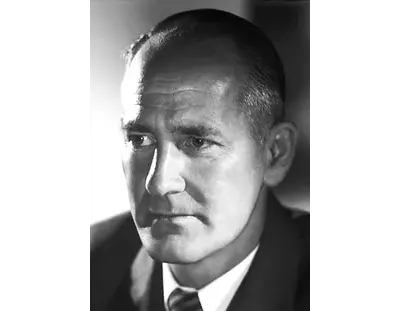
George Wells Beadle was an American geneticist. In 1958 he shared one-half of the Nobel Prize in Physiology or Medicine with Edward Tatum for their discovery of the role of genes in regulating biochemical events within cells. He also served as the 7th President of the University of Chicago.
