Nina Fedoroff Quotes
There's almost no food that isn't genetically modified. Genetic modification is the basis of all evolution. Things change because our planet is subjected to a lot of radiation, which causes DNA damage, which gets repaired, but results in mutations, which create a ready mixture of plants that people can choose from to improve agriculture.
Fedoroff, Nina. "Nina Fedoroff on Science to Feed a Growing Planet." EarthSky, EarthSky Communications, 15 Dec. 2008.


Some opponents of genetic engineering and Xenotransplantation (creating new animals by combining parts of different animals or adding parts of one animal species to another) cite this Biblical passage in their efforts to stop these new technologies. Yet both are well established and most people, including the opponents often do not even realize instances of it. For example, a large proportion of heart valve repairs in humans is accomplished by Xenotransplantation—replacing the defective heart valve with a pig heart valve. An entire line of biological research is being conducted by splicing the genes of a jellyfish that glows green under UV light into monkeys and worms to study the methods of genetic transmission.


As early as this was in scientific history, he essentially described the process whereby new species are formed by the mutation from the old series.


Actually, while such selective breeding is possible in all animals, the selection for a single trait almost always produces other unintended and unanticipated traits and these could be devastating to the “new generation”, unpleasant, benign, or anything else. At the time selective breeding was the only possible tool to produce “desirable” traits in an animal or to eliminate what someone things of as “undesirable” traits. Today, our understanding of the human genome and genetic engineering offers a much more reliable possibility of affecting animal traits without as many risks of random and unintended consequences that are present with breeding.


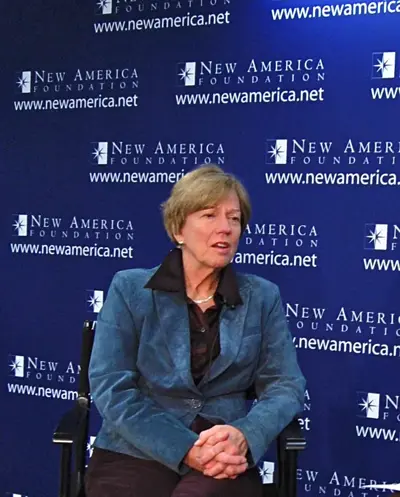
Nina Vsevolod Fedoroff is an American molecular biologist known for her research in life sciences and biotechnology, especially transposable elements or jumping genes. and plant stress response. In 2007, President George W. Bush awarded her the National Medal of Science, she is also a member of the United States National Academy of Sciences, the American Academy of Arts and Sciences, the European Academy of Sciences, and the American Academy of Microbiology.
