Elizabeth Blackburn Quotes
As maize became important for human food worldwide, modern agricultural research on maize breeding continued the corn breeding begun thousands of years ago in the Central American highlands.
Blackburn, Elizabeth H. "Telomeres and Telomerase: The Means to the End." Nobel Lecture, 7 Dec. 2009, NobelPrize.org, Nobel Prize Outreach AB.


Some opponents of genetic engineering and Xenotransplantation (creating new animals by combining parts of different animals or adding parts of one animal species to another) cite this Biblical passage in their efforts to stop these new technologies. Yet both are well established and most people, including the opponents often do not even realize instances of it. For example, a large proportion of heart valve repairs in humans is accomplished by Xenotransplantation—replacing the defective heart valve with a pig heart valve. An entire line of biological research is being conducted by splicing the genes of a jellyfish that glows green under UV light into monkeys and worms to study the methods of genetic transmission.


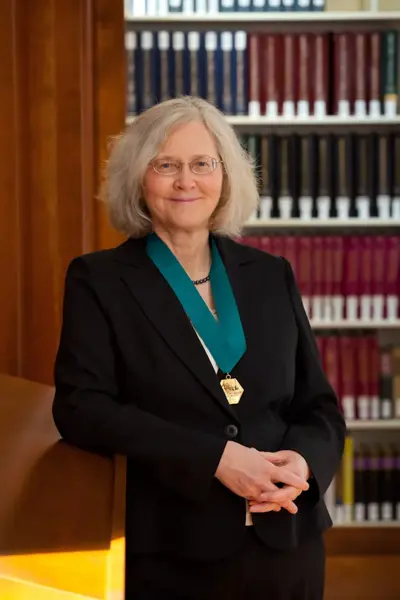
Elizabeth Helen Blackburn, AC FRS FAA FRSN is an Australian-American Nobel laureate who is the former President of the Salk Institute for Biological Studies. Previously she was a biological researcher at the University of California, San Francisco, who studied the telomere, a structure at the end of chromosomes that protects the chromosome. In 1984, Blackburn co-discovered telomerase, the enzyme that replenishes the telomere, with Carol W. Greider. For this work, she was awarded the 2009 Nobel Prize in Physiology or Medicine, sharing it with Greider and Jack W. Szostak, becoming the first Australian woman Nobel laureate. She also worked in medical ethics, and was controversially dismissed from the Bush Administration's President's Council on Bioethics.
