Michael Specter Quotes
All the food we eat, whether Brussels sprouts or pork bellies, has been modified by mankind. Genetic engineering is only one particularly powerful way to do what we have been doing for eleven thousand years.
Specter, Michael. "Seeds of Doubt." The New Yorker, 25 Aug. 2014.


Some opponents of genetic engineering and Xenotransplantation (creating new animals by combining parts of different animals or adding parts of one animal species to another) cite this Biblical passage in their efforts to stop these new technologies. Yet both are well established and most people, including the opponents often do not even realize instances of it. For example, a large proportion of heart valve repairs in humans is accomplished by Xenotransplantation—replacing the defective heart valve with a pig heart valve. An entire line of biological research is being conducted by splicing the genes of a jellyfish that glows green under UV light into monkeys and worms to study the methods of genetic transmission.


He and others have already done it. Joyce's lab at the Scripps Research Institute was the first to produce a self-replicating in vitro system, capable of exponential growth and continuing evolution, composed entirely of RNA enzymes. Most politicians do not understand much about evolution and many actually believe that evolution has not been proven an is not what governs the development of species. And at some point these men and women will have to come to grips with this scientific reality and decide what if any restrictions there should be on the human control and manipulation of the evolution of different species.


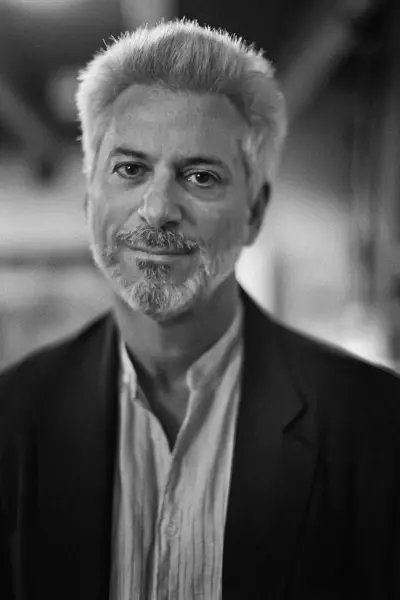
Michael Specter (born 1955) is an American journalist who has been a staff writer, focusing on science and technology, and global public health at The New Yorker since September 1998. He has also written for The Washington Post and The New York Times. Since 2019, he has also been an Adjunct Professor of Bioengineering at Stanford University. From 2012-2016 Specter was a Visiting Professor of Environmental and Urban Studies at Bard College.
