Rufus King Quotes
We go on in Congress as when you left us …. Resolves have been passed upon Resolves--and letter after letter has been sent to the deficient States, and all without the desired effect. We are without money or the prospect of it in the Federal Treasury; and the States, many of them, care so little about the Union, that they take no measures to keep a representation in Congress.
Even after the American Revolution, the Government of the Continental Congress under the Articles of Confederation was a mess which would only be resolved by the Constitutional Convention the next year and the ratification of the Constitution.
Rufus King, 1755-1827, Member of Continental Congress, Massachusetts Delegate to the Constitutional Convention, U. S. Senator (New York), U. S. Minister to Great Britain, Letter to Elbridge Gerry, April 30, 1786
Sourced by: Eigen's Political and Historical Quotations

Greene had a deep distrust of Congress from his wartime experiences regarding support of the troops. See {621971}.

Arguing for ratification of the proposed Constitution, Madison explained to those who thought the Federal Government would have new, powerful taxing authority. Madison explains that the existing Continental Congress could require the same degree of taxation even if the Constitution were not ratified. Another important aspect of this quotation is that the argument was clear that Federal taxation was to be used not only for the “common defense” but equally for the “general welfare.” There are those who believe that the only legitimate Federal taxes authorized by the Constitution are for defense and the military. However, the “general welfare” benefit was very clear, and that is how it has been.

Martin and other anti-Federalists argued against ratifying the new Constitution as they thought that it was inimical to the state’s interest. The notion of Federalism as a danger to states is clearly stated in this quotation for the debate on Constitutional ratification. Fundamentally, are Senators representatives of their states or of the Federal Government. If the former, who can the senators be recalled or impeached by the states to who the presumably owe their loyalty? This issue, like so many others, was compromised. The States would control the selection and method of selection of the Senators but could not recall or impeach. Looking back, we see this as logically inconsistent. However, looking at it as a political compromise between two legitimate points of view, it seems quite reasonable. Early America was a combination of idealism and pragmatism which has carried throughout American history.


“Commercial imposts” are customs duties. These actually provided virtually all of the tax revenue for the early American nation. Hamilton, realized, and prepared those who would ratify the Constitution that there would have to be additional forms of revenue of the growing nation. Nonetheless, there are a few today who argue that the customs duties are the only legitimate form of Federal taxation as that was what was in existence in early America. This quotation shows that the founding fathers did not intend that the nation be bound to that single mode of taxation.

In every American war, there have been those leaders who wanted to fight it “on the cheap.” While most modern people are most aware of the George W. Bush Administration providing insufficient funds to our troops in the Iraq War, there was a problem in the First World War, and President Roosevelt had to twist conservative arms to get the funds necessary for the Second World War. But even the American Revolution had the same problem as this quotation illustrates.

At the time, the Tea Party wing of the Republican Party had refused to compromise on anything and many saw as their primary objective was to make sure that the Democratic President was not successful with any of his legislative program. There was gridlock and divided government had become paralyzed government. Buffet and most other Americans were fed up with the gridlock and wanted Congress to start compromising and solving problems.

The United States has an unusual set of laws with respect to paying the nation’s bills. Congress must vote for the budget which authorizes and triggers the buying and spending. Then when it comes to paying for what has been bought, Congress must vote again to raise the debt ceiling so the national can pay for what Congress has already directed to be bought. Congress, in 2012 and 2013, voted to spend the money and then balked at authorizing the administration to borrow the money to pay the bills.


The Laffer curve was a mathematical, economic curve supposedly showing the relationship between tax rate and government revenue from taxes. In Laffer’s version of this curve, as interest rates go down, revenue from taxes goes UP because according to Laffer, there will be much more economic activity if taxes are lowered. In reality this has happened rarely in certain countries and in a very narrow range of tax deduction. As Chretien observes if you lower the tax rate to zero according to the Laffer curve this should maximize revenue but obviously it does not because with a zero rate there are no taxes collected even if the economy is booming. The Laffer curve was ideologically popular with those politicians wanting to lower taxes, but it never stood up to serious analysis and never worked in practice as Chretien observes. As a result, some people refer to the curve as the Laughter curve.

Many politicians had been complaining that the CDC and NIH had not trained more community hospital staffs in infectious disease protection techniques when the Ebola problem came to America. However, the budgets for these kinds of activities had been cut back each of the recent previous years. Lee made the assumption that Congress wanted government to work. In actuality there was a strong core of legislators in that Congress, who wanted government to fail so that citizens would tire of spending money on failures and thereby shrink the size of government. The members of Congress who wanted government to be effective however at that time had other more dramatic uses of money that training and capacity building of local hospitals.


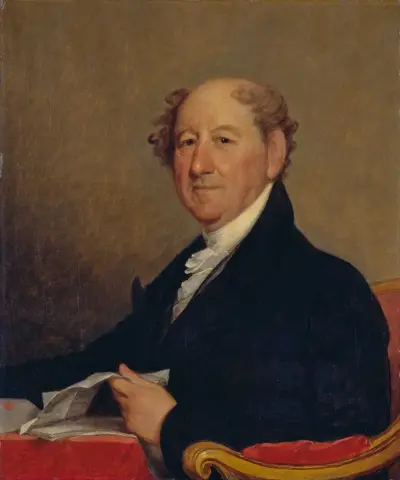
Rufus King was an American lawyer, politician, and diplomat. He was a delegate for Massachusetts to the Continental Congress and the Philadelphia Convention and was one of the signers of the United States Constitution in 1787. After formation of the new Congress he represented New York in the United States Senate. He emerged as a leading member of the Federalist Party, serving as the party's last presidential nominee in the 1816 presidential election.
