Mario Puzo Quotes
We don't know if capital punishment is a deterrent, but we know that men we execute will not murder again.
Puzo, Mario. The Fourth K. Random House, 1990.


Sherman was distressed at the full due process and trials that had to be given to Confederate spies and guerrillas and wanted to execute them quickly as an example. He complained to the Judge Advocate General that his men were “losing prisoners in the swamp” which both of them realized meant the immediate execution of prisoners by soldiers and junior officers which Sherman did not like either. The Lincoln administration insisted on the full due process. Even after conviction, President Abraham Lincoln tended to pardon many of the condemned.

Wade was urging the Prince to abolish the Death by 1000 Cuts {641825} and simply rely on beheading the form of execution for “lesser” crimes. Note that the Prince’s fears and arguments parallel the same given by modern proponents of the Death Penalty—without it criminals would not be controlled and instability would ensue.


He was one of the longest serving District Attorneys in America, He also served the largest jurisdiction of a District Attorney. When he first was elected DA of Manhattan there were over 600 murders a year. When he retired, there were only about 60, a 90% reduction. Yet, his experience was that capital punishment was useless in deterring murder. He had many other techniques far more effective.

The most common example that capital punishment does not work as a deterrent is that while thieves were being hung for their crime, other thieves would circulate among the watching crowd at the scaffold and pickpocket the observers.

This has been the case in EVERY jurisdiction that has had capital punishment. Capital punishment does provide vengeance for victims, relatives and society. And in many societies execution is less expensive than prison for life. But it has never curtailed crime despite the example. In London, they used to have public executions as examples to inhibit crime. While the crowd was watching a pickpocket be hung, other pickpockets were relieving many spectators of their wallets and watches.


There was, and still is in some parts of the world, this belief taht one of the main reasons for capital punioshment with visible and public executions was to deter others from comitting crimes by seeing the example of what happens to the transgressors. For these people, exemplified by this quotation of Dr. Johnson's, public executions are crime prevention. This notion tirned out to have been a fallacy. In England they found that during every public hanging, skilled pickpockets would steal from the onlookers who were tranfixed on the macabre secene--this despite the fact that pickpocketing was a hanging offence.

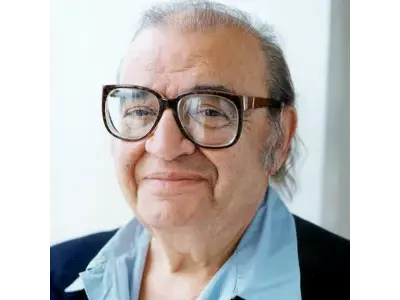
Mario Gianluigi Puzo was an American author, screenwriter, and journalist. He is known for his crime novels about the Italian-American Mafia and Sicilian Mafia, most notably The Godfather (1969), which he later co-adapted into a film trilogy directed by Francis Ford Coppola. He received the Academy Award for Best Adapted Screenplay for the first film in 1972 and for Part II in 1974. Puzo also wrote the original screenplay for the 1978 Superman film and its 1980 sequel. His final novel, The Family, was released posthumously in 2001.
