Eliot Spitzer Quotes
We did not investigate Wall Street because we were troubled by large institutions making a lot of money; we took action to stop a blatant fraud that was ripping of small investors.
The then attorney general had begun a series of investigation which discovered that most of the major Wall Street brokerage houses were engaged in systematic frauds to cheat small investors. One dramatic fraud he uncovered was that the research expert analysts of major firms would recommend the stock of businesses that their firm was doing investment banking for even when they knew that the companies were not doing well or were even in deep financial trouble. See {627544}.
Eliot Spitzer, Governor of New York State (Democrat), New York State Attorney General (Democrat), Quoted in New York Times Magazine, October 2, 2005
Sourced by: Eigen's Political and Historical Quotations

The then attorney general had begun a series of investigation which discovered that most of the major Wall Street brokerage houses were engaged in systematic frauds to cheat small investors. One dramatic fraud he uncovered was that the research expert analysts of major firms would recommend the stock of businesses that their firm was doing investment banking for even when they knew that the companies were not doing well or were even in deep financial trouble. See {591389} .


While not every person in the stock market was dishonest, a large number were, and the system itself was inherently unfair and disadvantaged the average investor. Despite the many reforms attempted over the years, as the 2008 meltdown proved, the same problem was still with us. Capone was essentially right then and even today.

Barry Bonds was a star professional baseball player whose accomplishments were aided by taking illegal drugs. He lied about his use of drugs, and the Department made a very large effort over years to finally prosecute him. However during that time there were almost no prosecutions of the thousands of bankers and financiers who had lied, cheated, forged legal documents and in the process almost permanently ruined the American economy—the Great Recession of 2008. The Justice Department claimed that white collar cases are very complex and take longer to prepare prosecutions. Critics claimed that there are so many law breakers, that the government does not want to prosecute all the felons, but just go after a few, and this is easier if time has gone by and public anger has receded or been forgotten.

At the time, the financial industry spent more money for lobbyists and campaign contributions than any other sector of the economy. The result is that they had extraordinary access to and influence upon members of Congress and their staffs, that more often than not, the actually drafted the language for laws, amendments and regulations and then les the strategy to pass the legislation or finalize the rule. Moreso than any other industry, they wrote their own rules. Even after the Meltdown of 2008 and the Great Recession where there was a public outcry for reform, the Dodd Frank legislation was influenced by the industry and after passage most of the rules and interpretations were written by the industry or greatly influenced by them.
Marcopolos had discovered the Bernie Madoff Ponzi Scheme Fraud 9 years before the government discovered the largest consumer fraud ($68 billion) in American financial history. He repeatedly sent warnings and explanations to the SEC investigators, most of which turned out to be exactly right. They ignored all of it I an era of deregulation, and never even investigated Madoff to see if there might be anything amiss.

Greenspan was not the amoral fool that this quotation makes him seem. Despite the fact that he was the most important financial officer of the country, he had an ideological faith that a free market was self-corrective in a democracy. The financial industry would police itself he believed. He also trusted the self interest of the financial corporations to restrain them from getting too greedy -- {637989}. He and many others were wrong and most Americans paid the price.

At this time it was 6 years after the Home Financing Crisis and the Meltdown of 2008 and despite tens of thousands of law violations by the bank, the Justice Department was finally finishing their investigations and requiring some penalties. Other negotiations with other banks were in progress, but no bank executives were going to jail for the millions they handled fraudulently, whereas a burglar who stole household goods would do jail time.


In the economic meltdown of 2008 and the aftermath, there were so many criminal violations of law in the financial industry that even the Democratic administration of Barack Obama chose not to jail the violators but to levy some large token fines albeit ones which were very affordable for the institutions who had to pay them—in many cases paying them with money made as a result of profits on no-interest money they received in bailouts after the 2008 Meltdown.
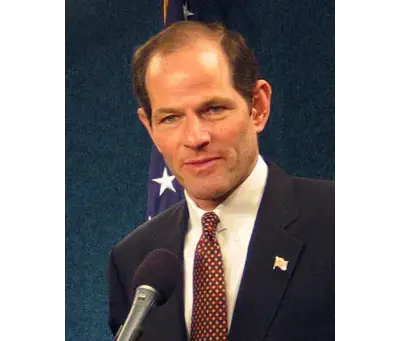
- Born: June 10, 1959
- Nationality: American
- Profession: Lawyer, Politician
Eliot Laurence Spitzer is an American politician, attorney, educator, and real estate developer. A member of the Democratic Party, he served as the 54th Governor of New York from 2007 until his resignation in 2008.
