Leo Tolstoy Quotes
War on the other hand is such a terrible thing, that no man, especially a Christian man, has the right to assume the responsibility of starting it.
Tolstoy, Leo. War and Peace. Translated by Richard Pevear and Larissa Volokhonsky, Alfred A. Knopf, 2007, p. 754.


Although generally a right wing conservative, Clark today sounds like almost like an extreme leftist on the issue. At the time however, many thought that he had taken leave of his senses. He not only was completely contrary to bipartisan national policy but opposed by almost universal American public opinion. He is one of the very few significant American officials to oppose the war policies.


At a requiem for those who died on the battleship Maine, Gibbons criticized war mongering yellow journals. This was a very courageous statement to have made. The Hearst newspaper had fired up the American appetite for revenge and almost all the politicians were advocating war. At the time anti-Catholicism in America was extensive and Catholics were always being accused of not being patriotic Americans and more loyal to the Vatican than to the United States.


At the time of this speech virtually the entire world believed that. However world attitude changed markedly after the administration of George W. Bush and the United States invasion of Afghanistan after September 11 and the Iraq War which was for regime change.

This speech was given 5 months before President Georg W, Bush initiated the invasion of Iraq. Politicians either supported the idea of an Iraq War or simply remained silent lest they be labeled unpatriotic. Obama not only opposed the war, but by 2007 most Americans had also come to believe that Bush’s invasion was a “dumb” and “rash” war.
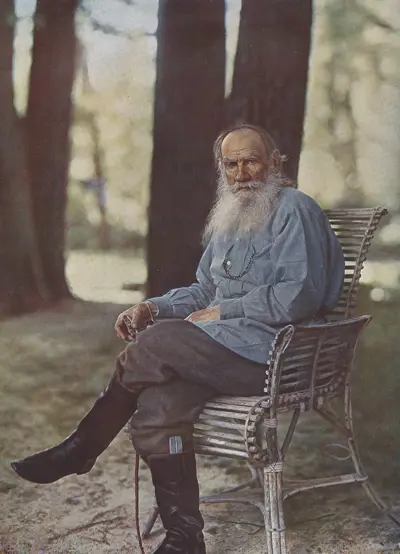
Count Lev Nikolayevich Tolstoy, 9 September, 1828 – 20 November, 1910), usually referred to in English as Leo Tolstoy, was a Russian writer who is regarded as one of the greatest authors of all time. He received nominations for the Nobel Prize in Literature every year from 1902 to 1906 and for the Nobel Peace Prize in 1901, 1902, and 1909. That he never won is a major controversy.
