Howard Zinn Quotes
War in our time is always indiscriminate, a war against innocents, a war against children.
Zinn, Howard. Howard Zinn on War. Seven Stories Press, 2001.


Bombing had reached the point where conventional bombing raids on industrial cities like Tokyo and Hamburg produced even more civilian casualties than did the atomic bomb at Hiroshima. Tibbets’ view, through the lens of hindsight, was developed by many of the Allied servicemen who had been forced into war by expansionist and militaristic nations like Japan and Germany both of which placed much of their war material manufacturing capability in the midst of their otherwise civilian cities. Both brutally violated the laws of war and committed atrocities many times over before the allies began retaliating. There are still some who believe that it was wrong to drop the atomic bomb on Japan. Some even feel that the mass bombing of Japanese and German cities in retaliation and in furtherance of the war effort was morally wrong. But at the time, the millions of casualties anticipated in the invasion of the Japanese mainland, persuaded virtually every American soldier and civilian that there was nothing wrong with use of the Atomic bomb, and many saw it as an absolute Godsend to prevent all the American and Japanese causalities that would have come otherwise. Many scholars remark on how it was virtually impossible to find any significant number of misgivings before or just after Hiroshima. Tibbet’s view was typical.


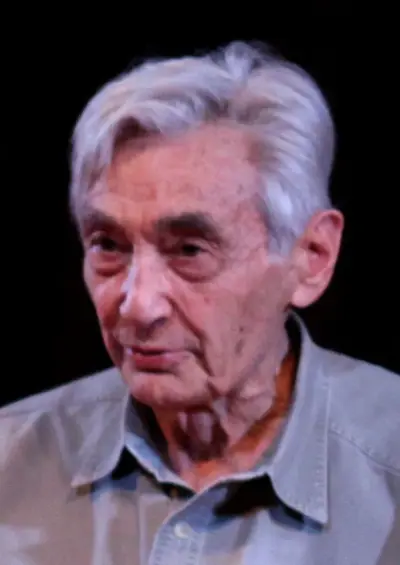
Howard Zinn (August 24, 1922 – January 27, 2010) was an American historian, playwright, philosopher, socialist thinker and World War II veteran. He was chair of the history and social sciences department at Spelman College, and a political science professor at Boston University. Zinn wrote over 20 books, including his best-selling and influential A People's History of the United States in 1980. In 2007, he published a version of it for younger readers, A Young People's History of the United States.
