William O. Douglas Quotes
Various guarantees [of the Constitution] create zones of privacy. The right of association contained in the penumbra of the 1st Amendment is one, as we have seen. The Third Amendment in its protection against the quartering of soldiers "in any house" in time of peace without the consent of the owner is another facet of that privacy. The 4th Amendment explicitly affirms the "right of the people to be secure in their persons, houses, papers, and effects against unreasonable searches and seizures." The 5th Amendment in its Self-Incrimination Clause enables the citizen to create a zone of privacy which the government may not force him to surrender to his detriment.
William O. Douglas, 1898-1980, U.S. Supreme Court Justice, Chairman, Security & Exchange Commission, Griswold v. Connecticut, 1965
Sourced by: Eigen's Political and Historical Quotations


For the classic formulation, see Brandeis, Olmstead v. U.S., 1927


Hamilton acknowledged that the major public objection to the new U. S. Constitution was its lack of a Bill of Rights, which Hamilton argued was unnecessary.

Senator Church was the chairman of the committee. It’s reports (14 in all) are the most extensive documentation of U. S. intelligence ever compiled.


The FBI had obtained a court order requiring apple to write software that could hack into a person's iPhone. Apple, with most other hi-tech companies in support, filed a motion with the court opposing the order. The FBI shortly thereafter withdrew its request for the order saying that they had found other solutions, when they had originally told the court that there were no other solutions. The issue however was and remains a very difficult political, moral, ethical, and legal conundrum.
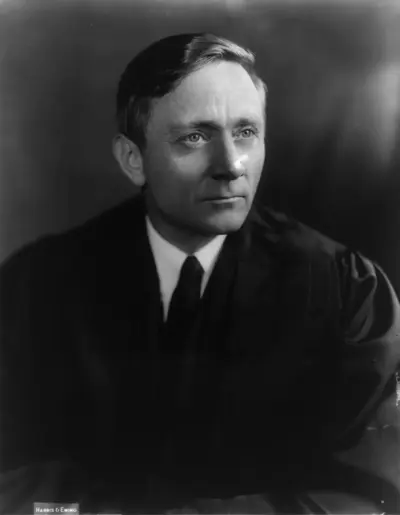
William Orville Douglas was an American jurist and politician who served as an associate justice of the Supreme Court of the United States. Nominated by President Franklin D. Roosevelt, Douglas was confirmed at the age of 40, one of the youngest justices appointed to the court. His term, lasting 36 years and 211 days (1939–75), is the longest in the history of the Supreme Court. In 1975, Time magazine called Douglas "the most doctrinaire and committed civil libertarian ever to sit on the court."
