Edward V. Long Quotes
When awesome investigative power is entrusted to so many individuals, it is extremely important that they wield it with a proper regard for your constitutional rights, especially your right to privacy.
Edward V. Long, 1908-1972, U. S. Senator (Democrat, MS), Playboy, January 1967
Sourced by: Eigen's Political and Historical Quotations


Many politicians were arguing that giving the intelligence agencies more power to wiretap, bug and hack into personal communications despite the 4th Amendment’s strictures argued that the public was in rational fear of terror attacks and had a right to be protected.


The Grammar Curmudgeon


Note the use of the phrase “against the government.” One of the unique aspects of the American Constitution and The Bill of Rights is that the government is considered a potential and even probable infringer on the liberties of the people. It is almost as though the government was the potential enemy. Modern libertarians state this very explicitly and it is ever present in the views of both the right and left wings of American politics. Most centrists recoil at the thought that some citizens see the government as the enemy, but even in America there have been times where the government has infringed on the rights of citizens only to have the courts or future administrations and Congresses correct the error.


This statement was made in response to the leaked disclosure that the U. S. Security agencies had software which would allow them to turn Smart TV Sets into listing devices without ever physically touching the TV set—for that matter from any place in the world. This area wgere there was a wide range of poarized scholarly legal opinion. The view here in articulated by Comey was that in a nation, Law enforcment personnel and authorities. albeit with checks and court supervision. must be able to override all comes to and rights of privacy in order to enforce the law. The other view is that from the earliest days of our nation there were certain areas of privacy that may not be breached. Much of the debate in over 200 year has been about the checks and balances that are associated with why the provacy needs to be breached and the due process thereof. But especially with the changes in technology iver the last centuries, the other side that it is not merely the issue of due process, When brain scanning technology is developed can there be any possiuble leagal justificaion to forcing a person to be brain scanned to determine is real rellings about his wife or children, Can privacy of individual thoughts be subject to a search warrant as is speech or action? More and more legal s holars have moved away from Comey's position becasue of the ver poor pewrformance that law enforcement has had in being checked. If the chances of a FISA Court ever denying a warrant is less thatn the odds of being struck by lightening, is there really any meaningful surveilance in our current systems. In addtion to the hundreds of throusands of State and local police department and investigator scandals that have been revealed in teh last 50 years, the FBI, The CIA, Military Inteligence Agencies and the NSA -- all of whom have been exposed for violating the laws about illegal searches and siezures, lying to the Courts and to the Congressional Oversight Commitees and even to a number of Presidents, has shifted the thinking of some to regulate by providing absolute limits on abridging certain kinds of privacy like brain scanning, statements of religioully protected concessions, spousal privilege etc.


In 2006, in the midst of the War on Terror, it was revealed that President George W. Bush had approved a electronic surveillance program that was on the surface contrary to the FISA laws prohibiting such government activity. The President claimed that the necessities of the war required such a deviation. A national debate ensued as to whether the President was always required to follow laws as passed or did he have “inherent powers” under the Constitution to do whatever he thought necessary to fight a war.
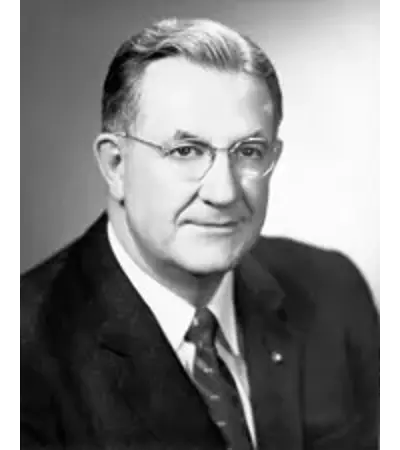
Edward Vaughn Long was a United States Senator from Missouri and a member of the Democratic Party. He served in the United States Senate from 1960 until 1968. One of his most notable accomplishments as a US Senator was the honor and privilege of writing the final draft of the Freedom of Information Act which passed in 1966 after 11 years of research, creation, and fight by the "Father of the Freedom of Information Act", Representative John E. Moss (D) of Sacramento, California.
