William J. Brennan Jr. Quotes
While the machinery of law enforcement and indeed the nature of crime itself have changed dramatically since the Fourth Amendment became part of the Nation's fundamental law in 1791, what the Framers understood then remains true today - that the task of combating crime and convicting the guilty will in every era seem of such critical and pressing concern that we may be lured by the temptations of expediency into forsaking our commitment to protecting individual liberty and privacy.
Brennan, William J. Dissenting Opinion. United States v. Leon. 468 U.S. 897. Supreme Court of the United States. 5 July 1984, pp. 929-930.


The agent, at J. Edgar Hoover’s instruction had approached the editor of Martin Luther King Jr.’s hometown newspaper and offered Patterson a photograph of King and a white woman in front of a motel with the “information” that King was having an affair with the woman. The agent suggested that the story was that the minster while pretending to respect Christian morality in his public persona was actually violating basic moral standards. Patterson, like any qualified editor would realize that the photograph proved nothing about an affair. There might have been other staff nearby who were not framed in the picture that the FBI agents had taken. There might have been a meeting to discuss civil rights strategy or something else. To Patterson it was unheard of that a Federal Official should try encourage a newspaper to slander an American citizen. Even if true, the Federal Role was astounding. Actually, this was a very common tactic of J. Edgar Hoover and not at all unusual. Also, although it is not known whether King was having any kind of affair with the woman in the picture, King was not a faithful husband from a sexual point of view. At the time, facts about extramarital sex were not printed about politicians and other political figures even if the journalists knew of them (as with John F. Kennedy’s many liaisons) unless they affected the person’s job or made them less effective. It is not known whether Patterson knew anything of King’s peccadillos but that kind of keyhole journalism was not practiced by serious newspapers at the time even if the pictures could be confirmed. That would be “keyhole journalism”—peeping through keyhole to invade the personal privacy of people.

The choice is usually contrasted between guilty persons going free, rather an innocent one be adjudicated guilty. But here the justice tells us that the avoidance of an innocent person being subject to easy arrest is important enough to have a system where guilty people sometimes escape justice.


In 2006, in the midst of the War on Terror, it was revealed that President George W. Bush had approved a electronic surveillance program that was on the surface contrary to the FISA laws prohibiting such government activity. The President claimed that the necessities of the war required such a deviation. A national debate ensued as to whether the President was always required to follow laws as passed or did he have “inherent powers” under the Constitution to do whatever he thought necessary to fight a war.


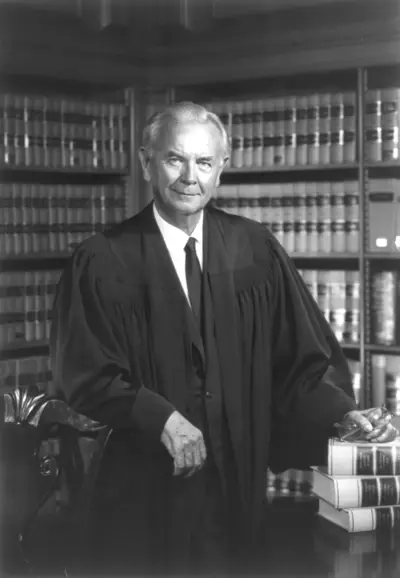
William Joseph Brennan Jr. was an American lawyer and jurist who served as an Associate Justice of the United States Supreme Court from 1956 to 1990. He was the seventh-longest-serving justice in Supreme Court history, and known for being a leader of the Court's liberal wing.
