EUGENE PATTERSON
(Eugene Corbett Patterson)
The agent, at J. Edgar Hoover’s instruction had approached the editor of Martin Luther King Jr.’s hometown newspaper and offered Patterson a photograph of King and a white woman in front of a motel with the “information” that King was having an affair with the woman. The agent suggested that the story was that the minster while pretending to respect Christian morality in his public persona was actually violating basic moral standards. Patterson, like any qualified editor would realize that the photograph proved nothing about an affair. There might have been other staff nearby who were not framed in the picture that the FBI agents had taken. There might have been a meeting to discuss civil rights strategy or something else. To Patterson it was unheard of that a Federal Official should try encourage a newspaper to slander an American citizen. Even if true, the Federal Role was astounding. Actually, this was a very common tactic of J. Edgar Hoover and not at all unusual. Also, although it is not known whether King was having any kind of affair with the woman in the picture, King was not a faithful husband from a sexual point of view. At the time, facts about extramarital sex were not printed about politicians and other political figures even if the journalists knew of them (as with John F. Kennedy’s many liaisons) unless they affected the person’s job or made them less effective. It is not known whether Patterson knew anything of King’s peccadillos but that kind of keyhole journalism was not practiced by serious newspapers at the time even if the pictures could be confirmed. That would be “keyhole journalism”—peeping through keyhole to invade the personal privacy of people.
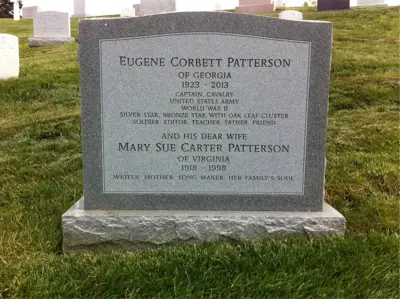
Eugene Corbett Patterson, sometimes known as Gene Patterson, was an American journalist and civil rights activist. He was awarded the 1967 Pulitzer Prize for Editorial Writing.
