William O. Douglas Quotes
Can there be any doubt that a Bill of Rights that in time of peace bars soldiers from being quartered in a home without the consent of the owner should also bar the police from investigating the intimacies of the marriage relation?
William O. Douglas, 1898-1980, U.S. Supreme Court Justice, Chairman, Security & Exchange Commission, 1961
Sourced by: Eigen's Political and Historical Quotations


Like civil rights advocates and protectors of later times, Beale was viciously attacked by the right wing for his “dangerous” tendencies. The church leaders of the time tried to have Beal tried in court for his criticism of established authority, but he had the respect of many and especially Queen Elisabeth I, and other than the constant smears, Beale endured.


For the classic formulation, see Brandeis, Olmstead v. U.S., 1927


Snowden, was a contract worker for Booz Allan assigned to the National Security Agency (NSA). He felt that some of the NSA activities were illegal and unethical and tried to complain to NSA officials who rebuffed him. Despite the fact that he had signed an agreement not to do so, he copied many critical, classified documents that exposed much of the NSA activities that the NSA officials had denied existed—including lying under oath to the Senate. He then made many of them public, violating his oath, breaking the law, and opening up an entire area of government spying which most Americans knew nothing about and about which senior government officials had lied under oath to Congress. They of course wanted to prosecute Snowden who had told the truth, while they had lied. For many Americans, this became a moral and ethical conundrum.

Many politicians were arguing that giving the intelligence agencies more power to wiretap, bug and hack into personal communications despite the 4th Amendment’s strictures argued that the public was in rational fear of terror attacks and had a right to be protected.
Historically, the Privacy Issues have taken a long time to be reflected in laws or regulations. Technologists are far ahead of the lawyers and politicians.

This statement was made in response to the leaked disclosure that the U. S. Security agencies had software which would allow them to turn Smart TV Sets into listing devices without ever physically touching the TV set—for that matter from any place in the world. This area wgere there was a wide range of poarized scholarly legal opinion. The view here in articulated by Comey was that in a nation, Law enforcment personnel and authorities. albeit with checks and court supervision. must be able to override all comes to and rights of privacy in order to enforce the law. The other view is that from the earliest days of our nation there were certain areas of privacy that may not be breached. Much of the debate in over 200 year has been about the checks and balances that are associated with why the provacy needs to be breached and the due process thereof. But especially with the changes in technology iver the last centuries, the other side that it is not merely the issue of due process, When brain scanning technology is developed can there be any possiuble leagal justificaion to forcing a person to be brain scanned to determine is real rellings about his wife or children, Can privacy of individual thoughts be subject to a search warrant as is speech or action? More and more legal s holars have moved away from Comey's position becasue of the ver poor pewrformance that law enforcement has had in being checked. If the chances of a FISA Court ever denying a warrant is less thatn the odds of being struck by lightening, is there really any meaningful surveilance in our current systems. In addtion to the hundreds of throusands of State and local police department and investigator scandals that have been revealed in teh last 50 years, the FBI, The CIA, Military Inteligence Agencies and the NSA -- all of whom have been exposed for violating the laws about illegal searches and siezures, lying to the Courts and to the Congressional Oversight Commitees and even to a number of Presidents, has shifted the thinking of some to regulate by providing absolute limits on abridging certain kinds of privacy like brain scanning, statements of religioully protected concessions, spousal privilege etc.


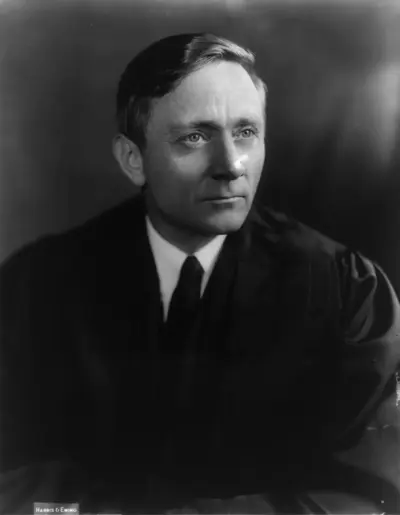
William Orville Douglas was an American jurist and politician who served as an associate justice of the Supreme Court of the United States. Nominated by President Franklin D. Roosevelt, Douglas was confirmed at the age of 40, one of the youngest justices appointed to the court. His term, lasting 36 years and 211 days (1939–75), is the longest in the history of the Supreme Court. In 1975, Time magazine called Douglas "the most doctrinaire and committed civil libertarian ever to sit on the court."
