George Washington Quotes
Upon the decease [of] my wife, it is my Will and desire th[at] all the Slaves which I hold in [my] own right, shall receive their free[dom] . . . . The Negroes thus bound, are (by their Masters or Mistresses) to be taught to read and write; and to be brought up to some useful occupation, agreeably to the Laws of the Commonwealth of Virginia, providing for the support of Orphan and other poor Children. And I do hereby expressly forbid the Sale, or transportation out of the said Commonwealth, of any Slave I may die possessed of, under any pretence whatsoever.
Washington, George. "George Washington's Last Will and Testament, 9 July 1799." The Papers of George Washington, Retirement Series, edited by W. W. Abbot, vol. 4, University of Virginia Press, 1999, pp. 479-492.

It was not uncommon for free Blacks to purchase slaves, marry them and set them free.


His family was one of the wealthiest in Rhode Island. He called in the entire family and he formally read the deed. The family itself had actually been active in the slave trade under John, his oldest brother, so this deed was very shocking to them. Moses became a leading abolitionist in Rhode Island and John the major defender of slavery in the state. Despite that, the brothers actually remained close.


“Manumitting” means the freeing of slaves. See Quotation 643600 for Laurens’ view of slavery despite the fact that he was a substantial slave owner. He was willing to lose the money represented by the value of his slaves, but most slave owners self interest was to the contrary. One of the most interesting thing about this quotation is the fact that Laurens received so much opposition from his fellow South Carolinians and other Southerners despite the fact that only Laurens would lost money by freeing his slaves. Even slave owners who wanted to do the right thing and were willing to lost the money were under enormous social and political pressure not to free slaves.


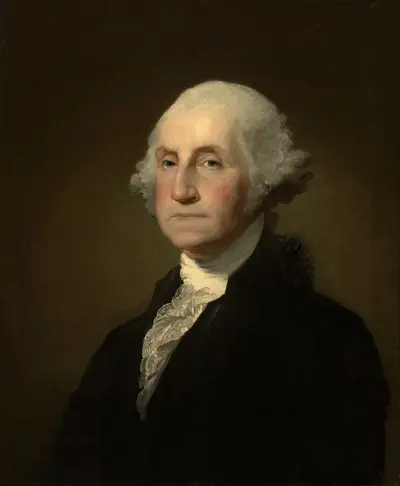
George Washington was the first President of the United States (1789-97), the Commander-in-Chief of the Continental Army during the American Revolutionary War, and one of the Founding Fathers of the United States. He presided over the convention that drafted the current United States Constitution and during his lifetime was called the "father of his country".
