Michael Pollan Quotes
Up until Prohibition, an apple grown in America was far less likely to be eaten than to wind up in a barrel of cider. ("Hard" cider is a twentieth-century term, redundant before then since virtually all cider was hard until modern refrigeration allowed people to keep sweet cider sweet.)
Pollan, Michael. The Botany of Desire: A Plant's-Eye View of the World. Random House, 2001, p. 9.


Sunday Excise Laws, sometimes called “Blue Laws”, prohibited commercial activity on Sunday, the day most Christians believe to be the Sabbath. Then such laws had not been constitutionally tested and when the were later were they were all found to be unconstitutional. Some Christian sects believe that Saturday is the Sabbath as do most Jews. Muslims believe Friday is the Sabbath. So any state determination on the Sabbath favors some religious viewpoint and discriminates against others. Today, decisions about Sabbath are left to individual consumers and store owners. Saloon keepers were particularly hard hit if they catered to the working man as in those days people worked a 6 day week and Sunday was the only day that people had leisure time. When TR became Police Commissioner, the law was on the books but rarely enforced as they were unpopular with most of the population—the orthodox Christians excepted. He felt obligated to enforce it even if he thought it too strict himself.

To this day efforts to regulate alcohol, the nation’s most frequent drug of choice and cause of addiction and violence, are met with the same “virtues” of employment and tax revenue. It was not until the 1990s that we learned that the revenue from alcohol taxes was far less than the cost of society coping with the problems of drinking and addiction.

Suggestions of prohibition of alcohol have been made for a long time in America. It was tried for a few years in he early 20th century. Instead, alcohol is regulated in most parts of America.

This anti-prohibition plank passed by the largest margin of any on the platform.


“Wets” were opposed to Prohibition while “drys” were in favor. The Ohio legislature ratified the 18th amendment to the Constitution enacting Prohibition, but in a statewide referendum, the people voted against it. The Supreme Court ruled that regardless of the will of the populace, it is only the legislature that could ratify or not ratify a Constitutional amendment passed by Congress.
The charge was made that the wealthy, who paid the larger proportion of an income tax, could get the poor and the middle class to pay the taxes via a Federal Alcohol Tax which would be paid proportional to the alcohol consumed—not even the cost of the alcohol. A quart of cheap whiskey was taxed at the exact same amount as a quart of fine, aged, double malt liquor—about the most regressive tax that has been and still is in force in America. If Prohibition were still in force, the Federal Government would have to raise the income tax to make up for the loss of an alcohol tax. It is debated to this day, how much of a factor this played in the repeal of prohibition.

i.e. serving no intoxicating beverages at the White House The practice to which he was referring was serving no intoxicating beverages at the White House.

Samuel Langhorne Clemens, 1835-1910. The Congressmen who voted for Prohibition in the next century had not read or believed this quotation of Twain’s.

Not all police take bribes from drug dealers and operators but many do. Of the minority who are corrupt, the drug dealers are the source of most of the money.

The poem was his summary of the Wickersham Commission’s (National Commission on Law Observance and Enforcement) conclusion regarding Prohibition.

This is a wonderful historical quotation which illustrates the effect of Prohibition on Norway—most of which was negative. Despite the fact that this article had been published in a leading American journal, virtually no one paid attention to it when Prohibition was being debated and instituted in America a few years later. Another aspect of the quotation is the economic effect. It illustrates how easy it is to start a trade war that was completely unintended. Also how a country, in this case Portugal and Spain, will make foreign policy decisions of which their poorer people bear the brunt.
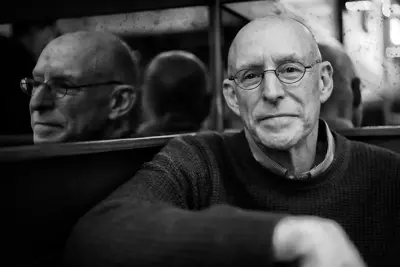
Michael Kevin Pollan is an American author and journalist, who is currently the Knight Professor of Science and Environmental Journalism at the UC Berkeley Graduate School of Journalism.
