Andrew J. Bacevich Quotes
U. S. forces [are] more or less permanently engaged in ongoing hostilities. In one theater after another, fighting erupts, ebbs, flows, and eventually meanders toward some ambiguous conclusion, only to erupt anew or be eclipsed by a new round of fighting elsewhere. Nothing really ends.
Some others at the time did not see the different theaters of fighting as separate, but observed one commonality of almost all the violent conflict in the world—–Islamic, fundamentalist, extremism. Hence they viewed it as a world war with a singular enemy. Wars rarely ended at the time because most world opinion was against the Draconian degree of destruction and suffering for a people to be so broken that they will not consider fighting again. Cease fires allow the partied to regroup and ready themselves to continue their struggle.
"Ending Endless War: A Pragmatic Military Strategy", Foreign Affairs, September / October 2016
Sourced by: Eigen's Political and Historical Quotations


Kerry, a decorated, former Navy officer, was then a spokesperson for Vietnam Veterans Against the War.


sending American troops to Vietnam

There was some fear in the North that the shots fired by the Southern rebels, might encourage one or more of the European Powers to start a war with the United States. And if the Rebellion turned into a full scale Civil War, the South would surely encourage such acts be promising trade concessions in the export of Southern cotton. Seward’s confident and bellicose statement distressed some Union colleagues who feared that Seward might anger and provoke one of more of the machismo and nationalistic European Powers. However, if Seward was bluffing, the bluff worked. No country encroached on American interests during the Civil War. If he was not bluffing, he certainly, along with many others, understated the difficulty that the North would have putting down the Southern rebellion.
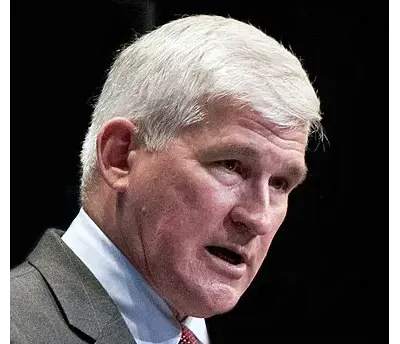
Andrew J. Bacevich Jr. is an American historian specializing in international relations, security studies, American foreign policy, and American diplomatic and military history. He is a Professor Emeritus of International Relations and History at the Boston University Frederick S. Pardee School of Global Studies. He is also a retired career officer in the Armor Branch of the United States Army, retiring with the rank of colonel. He is a former director of Boston University's Center for International Relations (from 1998 to 2005), now part of the Pardee School of Global Studies. Bacevich is the co-founder and president of the Quincy Institute for Responsible Statecraft.
