Alexander James Dallas Quotes
Treasury notes are a precarious substitute either for coin or for bank notes, charges as they are with a growing interest, productive of no countervailing profit or emolument, and exposed to every breadth of popular prejudice or alarm.
Alexander James Dallas, 1759–1817, U. S. Secretary of the Treasury, Letter to John W. Eppes, October 17, 1814
Sourced by: Eigen's Political and Historical Quotations

There has always been a fear of inflation and currency debasement by governments. Since ancient times, rulers issued coins and when they were made of cheap metals like copper or iron, the ruler could mint as much as he wanted and when he did so the value went down. By using only precious metals, gold and silver, for coins, there would be a natural restraint on government. Garfield was one of those who believed that we should always have money of gold and silver. The United States would use that principle for the next century even backing its paper money with gold and silver. In the Nixon administration the United States abandoned the gold standard. Today, it is the ability of a country to produce things that maintains value of paper money which has been supplanted in many cases by electronic money.

At the time, a bank note—paper money issued be a private bank—was not backed by any gold or silver and was not insured bym the government. A bank could print as much as they wanted, so it was always worth less as the further you were from the particular issuing bank, the less you could get your bank note, because no one knew whether or not the issuing bank would redeem the note or even be in existence. So every private bank note had diminished value for the public. However, carrying gold and silver around and making change for precious metals was difficult and often impractical. So people used banknotes. The same thing happens with credit cards today. The merchant has to pay a fee to the credit card company and the bank and therefore charges us more for whatever we buy. But most consumers and merchants are willing to pay the difference to obtain the convenience of the credit card,


At the time the United States was on the Gold Standard and all our money was backed by gold. Root and others were afraid that a Federal Reserve Bank, a proposal that was being debated in Congress, would cause a large amount of paper money to be printed which other nations would obtain through trade and then exchange that for American gold—a process which would deplete the American gold supply. A few years before, William Jennings Bryan had argued that the Gold Standard did not allow America sufficient ability to increase the money supply to serve the growing population and economy. See {640992}.


Debts accumulated by the allies in World War I was still outstanding a decade later. When it was proposed that the United States help reduce this debt, President Coolidge remarked:


Specie is a word for paper money. Such political artifices were well known in More’s time, and yet still exist in many countries.

At the time, there was no United States currency. Private banks in some of the states issued their own money. A dollar from Georgia might only be worth 75 cents in New York.

The military had made a mess of the Argentine economy and inflation was rampant. Some Argentines turned their Argentine pesos into dollars betting that the Argentine economic situation would get worse, This run from the peso would make it worse. If Argentina stabilized the peso, speculators in dollars would lose money. The Minister trying to discourage a run from the peso, warned Argentinians against the dollar investment. A days later the dollar went up over 30%. Those who had listened to the minister lost much of their money, He was soon forced to resign by the military dictators who controlled the government.


At the time there was a worldwide recession and although the United States economy was not in very good shape, it was better than the other democracies and those nations with better economies then were authoritarian governments where investors did not trust their currencies. As a result, many wealthy people and businesses throughout the world were willing to lend money to the United States as a safe haven.

The very act of printing money created a debt—at the time and until the Nixon Administration which went off the gold standard—the government owed the gold or silver and the spicie—the printed money—was a promissory note.


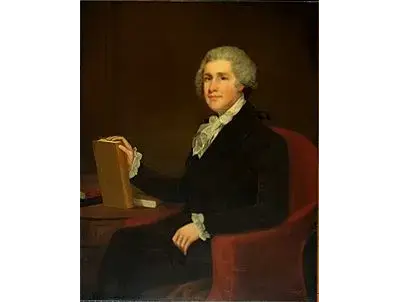
Alexander James Dallas was an American statesman who served as the 6th United States Secretary of the Treasury from 1814 to 1816 under President James Madison.
