Standing Bear Quotes
Today the children of our public schools are taught more of the history, heroes, legends, and sagas of the old world than of the land of their birth while they are furnished with little material on the people and institutions that are truly American.
Standing Bear, 1868-1937, Oglala Sioux Indian Chief, Letter to President Franklin D. Roosevelt, 1933
Sourced by: Eigen's Political and Historical Quotations


Bourne was one of the first writers with a national audience to question the classic but never real “melting pot” theory of immigration and suggest the “salad” model though he never used the term.

Jinnah’s vision was for a modern educational system and curriculum throughout Pakistan. He would not have recognized the religious madrassas that taught only the Koran and Islamic subjects that became so prevalent in Pakistan by the 21st century.

At the turn of the century Parker raised the school integration issues of Brown v. Board of Education 50 years earlier.


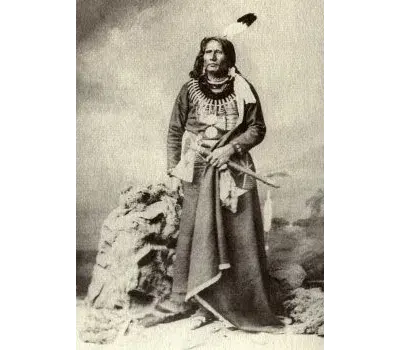
Standing Bear (c. 1829–1908) (Ponca official orthography: Maⁿchú-Naⁿzhíⁿ/Macunajin; other spellings: Ma-chú-nu-zhe, Ma-chú-na-zhe or Mantcunanjin pronounced [mãtʃuꜜnãʒĩꜜ]) was a Ponca chief and Native American civil rights leader who successfully argued in U.S. District Court in 1879 in Omaha that Native Americans are "persons within the meaning of the law" and have the right of habeas corpus, thus becoming the first Native American judicially granted civil rights under American law. His first wife Zazette Primeau (Primo), daughter of Lone Chief (also known as Antoine Primeau), mother of Prairie Flower and Bear Shield, was also a signatory on the 1879 writ that initiated the famous court case.
