Ben Bernanke Quotes
To achieve a more balanced international system over time, countries with excessive and unsustainable trade surpluses will need to allow their exchange rates to better reflect market fundamentals.
Bernanke, Ben S. "Rebalancing the Global Recovery." Board of Governors of the Federal Reserve System, 19 Nov. 2010.


While devaluation may have been intended to have the effect of stimulating exports and inhibiting imports, many countries have populations which feel “cheapened” by the process—that they are worth less as laborers and their raw materials are valued less in the eyes of the world.


De Gaulle is commenting on the role of the dollar in American dominance.

Currency Pegs are policies and commitments that countries make to sate that their currency henceforth will have a fixed relationship to another currency—usually the American Dollar, the English Pound or the Euro. If a second and even more countries also agree to peg their currency to the same, then the counties who are pegging can trust each other’s currency providing economic stability and facilitating trade.


“Pegged” exchange rates are a country’s money where the Government sets the value of the money in terms of some other currency—usually American dollars. The advantage of a pegged currency is that it is stable and does not fluctuate day to day. The disadvantage is that people realize that the value is artificial and other countries will not accept the pegged currency. Worse natives try and get as many dollars as they can because the fear that the Government will devalue and change the rate of exchange of the pegged currency.
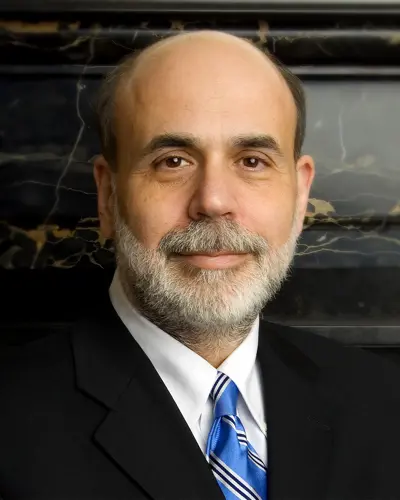
Ben Shalom Bernanke is an American economist at the Brookings Institution who served two terms as the 14th Chair of the Federal Reserve, from 2006 to 2014. During his tenure as chair, Bernanke oversaw the Federal Reserve's response to the late-2000s financial crisis, for which he was named the 2009 Time Person of the Year. Before becoming Federal Reserve chair, Bernanke was a tenured professor at Princeton University and chaired the department of economics there from 1996 to September 2002, when he went on public service leave.
