Herbert Hoover Quotes
When a nation devalues its currency, it, in effect, increases its tariffs.
Herbert Hoover, 1874-1964, 31st President of the United States (Republican, IA), Hugh Gibson, U. S. Diplomat and Ambassador, Problems of Lasting Peace, 1942
Sourced by: Eigen's Political and Historical Quotations

The assumption was that money would always be backed by gold or silver. In effect, raising or allaying the money was to change the amount of gold or silver that a particular denomination of money would be able to be exchanged for. This is one of the interesting proofs that these processes did nothing economically—for if they could, no one would want the money. This has always been a weakness or a strength—depending on one’s political point of view—of a gold standard.

While devaluation may have been intended to have the effect of stimulating exports and inhibiting imports, many countries have populations which feel “cheapened” by the process—that they are worth less as laborers and their raw materials are valued less in the eyes of the world.


He was also the Finance Minister. In this case he was referring to China which undervalued their exchange rate. This made it easier for them to sell Chinese products abroad since buyers from abroad could buy cheaper than if the Chinese exchange rate were allowed to reach the market values. Keating and many others believe in the long run the Chinese or anyone else who tries to control their currency artificially will suffer economic consequences.

What the Prime Minister was trying to say is that the buying power had not been diminished suddenly for local and non-imported items.


This objective finally reached its peak in the Nixon administration when the U. S. went off the gold standard. 75 Years after FDR tried to make the U. S. dollar more resilient, America had been so successful that many foreign governments having the same problem of little or no control over their currency, have pegged their currency to the U. S. dollar, thus gaining our stability.


De Gaulle is commenting on the role of the dollar in American dominance.

The exact phrase has not been found in Gresham's writings but the idea appeared in a 1558 letter to Queen Elizabeth I. The expression has come to be known as Gresham's Law.

Describing the currency situation of the country:

This is the first major history of banks written in the United States.

“Pegged” exchange rates are a country’s money where the Government sets the value of the money in terms of some other currency—usually American dollars. The advantage of a pegged currency is that it is stable and does not fluctuate day to day. The disadvantage is that people realize that the value is artificial and other countries will not accept the pegged currency. Worse natives try and get as many dollars as they can because the fear that the Government will devalue and change the rate of exchange of the pegged currency.
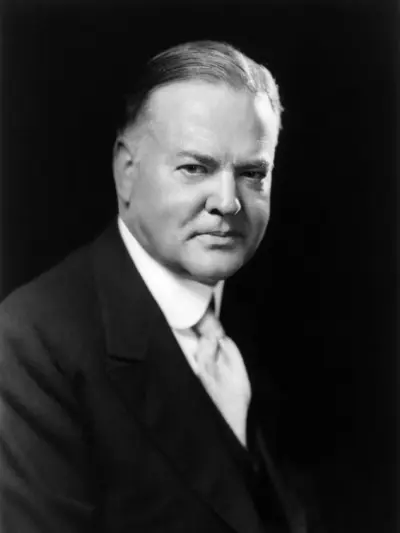
Herbert Clark Hoover was an American politician, businessman, and engineer, who served as the 31st president of the United States from 1929 to 1933. A member of the Republican Party, he held office during the onset of the Great Depression. Before serving as president, Hoover led the Commission for Relief in Belgium, served as the director of the U.S. Food Administration, and served as the third U.S. Secretary of Commerce.
