Debora L. Spar Quotes
Leaders often associate strong currencies with national strength and thus view declining currencies as insults to their prowess.
Debora L. Spar, President of Barnard College & Columnist, "Economics", Foreign Policy, March / April, 2015
Sourced by: Eigen's Political and Historical Quotations


What the Prime Minister was trying to say is that the buying power had not been diminished suddenly for local and non-imported items.


The Hoover administration had lost control of the economy. The nation was in a depression. Banks were failing. Gold was being hoarded and taken out of circulation while we were on the gold standard. Roosevelt’s solution was to decouple American money and gold—a solution that William Jennings Bryan had suggested many years earlier. See {640978}.


While devaluation may have been intended to have the effect of stimulating exports and inhibiting imports, many countries have populations which feel “cheapened” by the process—that they are worth less as laborers and their raw materials are valued less in the eyes of the world.

This was another of the views of the fascists that drove much of their policies and practices but are demonstrably untrue. The world has many countries that have little power or world respect and yet the people are very happy. Luxemburg, Monaco, Finland and the Baltic Countries are just a few of the counter-examples.


FDR was then a candidate for the Democratic Vice Presidential Nomination. This statement shocked some of the conservative French and British delegates and officials such as Ramsay MacDonald, Georges Bonnet, and Neville Chamberlain, but economist John Maynard Keynes strongly approved of Roosevelt Roosevelt’s statements. At issue was whether or not the major currency powers should confer frequently and set the international currency exchange rates or should the rates float and be determined at any point by the free market in currency. FDR held the latter view which was opposed to the positions of the conservative banker-oriented delegates from the European counties, However Roosevelt’s statement was considered “harsh” and “vituperative” by the conservatives and the entire conference collapsed over them. FDR admitted that perhaps he had been too strong and blunt in his language. An irony of this quotation is that 80 years later the positions of liberals and conservatives had both flip-flopped. It became the conservatives who adopted the FDR free market for currency exchange while many liberals called for government intervention and agreement on exchange rates to prevent instability.

See {583710} for his grandchild’s variation.


President Richard Nixon, a conservative Republican did not agree with this view as it was he who led America to abandon the gold standard to back its money.
The assumption was that money would always be backed by gold or silver. In effect, raising or allaying the money was to change the amount of gold or silver that a particular denomination of money would be able to be exchanged for. This is one of the interesting proofs that these processes did nothing economically—for if they could, no one would want the money. This has always been a weakness or a strength—depending on one’s political point of view—of a gold standard.
“Pegged” exchange rates are a country’s money where the Government sets the value of the money in terms of some other currency—usually American dollars. The advantage of a pegged currency is that it is stable and does not fluctuate day to day. The disadvantage is that people realize that the value is artificial and other countries will not accept the pegged currency. Worse natives try and get as many dollars as they can because the fear that the Government will devalue and change the rate of exchange of the pegged currency.


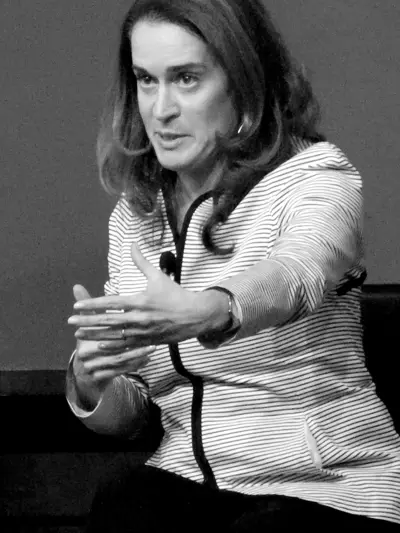
Debora L. Spar is the current Senior Associate Dean of Harvard Business School Online and former President of Barnard College, a liberal arts college for women affiliated with Columbia University. As President of Barnard, she was also an academic dean within Columbia University. Spar was appointed Barnard's 7th president in July 2008 and replaced Judith Shapiro, Barnard's 6th president, after a teaching career at Harvard Business School where she was Professor of Business Administration and Senior Associate Dean for Faculty Research and Development. Spar was appointed the 10th president of Lincoln Center for the Performing Arts, beginning in March 2017, but announced her resignation in April 2018 after only about one year in the position. She became the new Senior Associate Dean of Harvard Business School Online in January 2020.
