Barbara Ehrenreich Quotes
Thus will the fondest dream of Phallic science be realized: a pristine new planet populated entirely by little boy clones of great scientific entrepreneurs free to smash atoms, accelerate particles, or, if they are so moved, build pyramids -- without any social relevance or human responsibility at all.
Ehrenreich, Barbara, and Deirdre English. For Her Own Good: Two Centuries of the Experts' Advice to Women. Anchor Books, 1978.


Freedman was the producer and narrator of a TV series on sophisticated topics of science. There are a number of jurisdictions in the world where it is not a crime to clone a human being. Once someone implants a clone into a human female, there is little society can do little to “prevent” the clone from being born. Many religious fundamentalists who oppose human cloning will fight to protect the life of the clone baby in utero. For all we know, clones have already been born and are attending school with other children as no one could easily tell that a child (or an adult) is a clone.

This was written over 2 decades before Dolly the sheep was first cloned. Since his call for a societal public discussion about cloning, there has been very little, but by the 21st century there had been just a few hasty, ill-informed, almost hysterical efforts to legislate on the subject.


40 years later, it was clear that he was correct about the possibility of man directing his own evolutionary future. It was also clear that man was doing just that by his effect on his own ecosphere and other humans. However Beadle envisioned an intentional planned set of actions, taken by society as a whole. However, in most counties the political system has not been very facile at examining the alternatives with the advice of scientists. In the United States about half of the politicians reject the information provided by the overwhelming majority of the scientists, and the great challenge was whether in the future man will knowingly and with forethought affect his evolution or with ignorance and unintended consequence will do so.


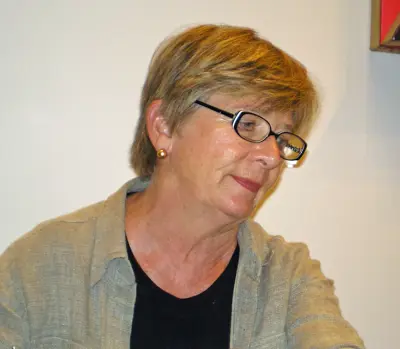
Barbara Ehrenreich is an American author and political activist who describes herself as "a myth buster by trade" and has been called "a veteran muckraker" by The New Yorker. During the 1980s and early 1990s she was a prominent figure in the Democratic Socialists of America. She is a widely read and award-winning columnist and essayist, and author of 21 books. Ehrenreich is perhaps best known for her 2001 book Nickel and Dimed: On (Not) Getting By in America. A memoir of Ehrenreich's three-month experiment surviving on minimum wage as a waitress, hotel maid, house cleaner, nursing-home aide, and Wal-Mart clerk, it was described by Newsweek magazine as "jarring" and "full of riveting grit," and by The New Yorker as an "exposé" putting "human flesh on the bones of such abstractions as 'living wage' and 'affordable housing'." She is a recipient of a Lannan Literary Award.
