Lytton Strachey Quotes
Though, with the ascendancy of Louis, the political power of the nobles finally came to an end, France remained, in the whole complexion of her social life, completely aristocratic.
Strachey, Lytton. Landmarks in French Literature. Henry Holt and Company, 1912, p. 62.


This is the first use of the famous phrase—“survival of the fittest.” Spencer thought of it as a synonym for Darwin’s “natural selection”, but modern scientists do not use the phrase because it is circular reasoning. It is the fittest who survive it implies when whichever species survives is obviously fittest for that time and place. It is also misinterpreted as a predation scale war which it is not. The lion is much stronger than the antelopes and feeds on them, but the lions are dying out while the antelopes are thriving and developing. The fittest may be so because the species is a faster and more reliable breeder. Most people with a limited knowledge of evolution and scince associate the fittest with the top predator. However, over time, most top predators have NOT survived as well as many other species which in a predation fight are weak, but are more can handle a wider climate range, can change rapidly in response to natural disaters, can breed efficiently, are resistant to diseases, require less food, and literally thousands of other factors.

1st Viscount Bolingbroke. See {627799} for the origin of the bias against merchants and money men. It also represents a rigidity of class structure that characterized England until very recently. The landed gentry were the first class citizens. Usually titles went with the land. In America, someone who would be successful as a merchant or a banker could achieve the highest of social status and political influence. This was not true in England where a merchant that was far more wealthy than a landed lord was not accepted by the aristocracy.

In modern America, there are two political views of this notion. The one held by a narrow majority of the population is Trenchard’s quotation taken literally. Their view is that there is no way to maintain liberty if there is too wide a wealth gap between the rich and the rest of the population. The second variant, held by many conservatives, limits the equality to equality of opportunity. They are loathe to take any position that says that any gap between the rich and the remainder of the citizens might be too large. They would particularly disagree with the first sentence of this quotation. Another consideration is that this quotation does not even consider what became a major problem in the American Democracy—the ability and propensity of the very rich to bribe legislators and officials and/or make “campaign contributions” to obtain favorable treatment and/or “access”.

West Saxons had a bad experience with a “Queen” who was not very good. This quotation illustrates that the institutions of monarchy varied from time to time and place to place, just like democracies that have many differences among them.


What Alcuin did not say was that Charlemagne had the largest and most powerful army.
Salisbury was a brilliant, effective prime minister, but he was a snob and not a democrat. See {639131}.


Paine was totally wrong on this count. It is true that monarchy and aristocracy were never the same as they had been, but the American and French Revolutions were catalysts for the monarchs and aristocrats to reform. In a Darwinian sense, monarchy and aristocracy evolved, and the early members would hardly recognize the modern aristocracy of Britain and other European countries that still have them and the Constitutional monarchs of today have almost evolved into a new specie.
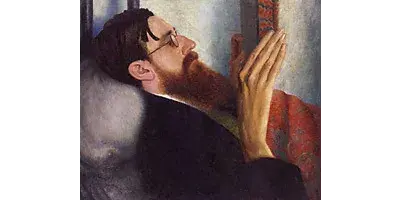
Giles Lytton Strachey was an English writer and critic.
