Niccolo Machiavelli Quotes
Those republics which in time of danger cannot resort to a dictatorship, or some similar authority, will generally be ruined when grave emergencies occur.
Niccolo Machiavelli, 1469-1527, Florentine Statesman & Political Philosopher, Quoted in Schlesinger, The Imperial Presidency, Houghton Mifflin, 1973
Sourced by: Eigen's Political and Historical Quotations

There are still remnants of Fascism throughout right wing and conservative circles in Europe.

Lippmann was the most influential pundit of the time. Roosevelt had just been elected but had not yet assumed office. The country was in the midst of the Great Depression and many communities had 80% unemployment. Banks had failed, people were starving, and many people thought that democracy was just not suited to deal with such severe problems. Roosevelt, however rejected the advice and always worked through the Congress and in so doing saved democracy in America.

This is the argument—an essence of Fascism—of every dictator from Julius Caesar onward. See {640792} for more of his views on dictators.


Historically, most dictators have announced their worst intentions and in many cases were not believed by much of the world who then learned that they had made a serious error.

Commenting on the fact that China was eliminating it's Constitutional requirement that government leadership had to change every 10 years.


Such a comcept has been shared by most autocratic governments like Nazi Germany, but before and after Germans did not see this subservience to and power of the state as desirable or even necessary. The Vatican has had periods like this. But this Sistema has been a part of Russian culture during the millinium of Czarist rule. It was used andn explicitly made a part of Lennin and the Russian Revolutionaries, and then so heavily used by Joseph Stalin before, during and after WWII. It continued under the Post Stalinist Communist leader and when the Soviet Union fell and Russia became less authoratoran, it was not utilized but it was deeply embedded in the Russian psyche and culture as demonstrated by the fact that Vladimir Putin began t use it as an instrument of his governance.

Prevented by the Military from ever taking office. She was commenting on recent attacks against minority Muslims by the majority Buddhists and one of the major reasons she claimed was the lack of trust in the Muslim community that had developed during the period of military dictatorship.


Soon he had the power of a dictator but he didn’t force his will on the vast majority of the Cubans. His decrees made all the wealthy and the cronies of the dictator Batista outraged and most of them left Cuba. He was a dynamic demagogue and the people handed him dictatorial powers which he did not reject. He was so popular that he was the only leader in the Americas who would give 4 hour speeches and move through the streets without any bodyguards until the United States and dissident expatriates tried to assassinate him. With all that popularity, none the less he would not allow open criticism of his regime and jailed many political opponents. So he indeed became a dictator but never needed the machine gun to maintain power.


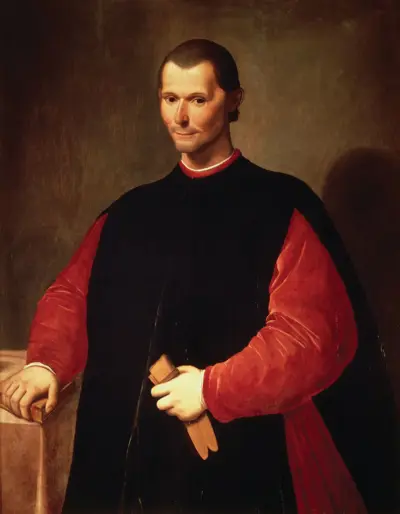
Niccolò di Bernardo dei Machiavelli was an Italian Renaissance diplomat, philosopher and writer, best known for The Prince (Il Principe), written in 1513. He has often been called the father of modern political philosophy and political science.
