Walter Lippmann Quotes
A democracy which fails to concentrate authority in an emergency inevitably falls into such confusion that the ground is prepared for the rise of a dictator.
Lippmann, Walter. Essays in the Public Philosophy. Little, Brown and Company, 1955.

Lippmann was the most influential pundit of the time. Roosevelt had just been elected but had not yet assumed office. The country was in the midst of the Great Depression and many communities had 80% unemployment. Banks had failed, people were starving, and many people thought that democracy was just not suited to deal with such severe problems. Roosevelt, however rejected the advice and always worked through the Congress and in so doing saved democracy in America.


“Personal government” meant to him charismatic individuals and demagogues who came to power in a republic and led it into a dictatorship. As opposed to representatives of political parties where a single individual could not control everything. However, this was before Adolf Hitler and his political party—the Nazis—came to power by election and turned Germany into a dictatorship. It takes more than structure to preserve democracy.


There are still remnants of Fascism throughout right wing and conservative circles in Europe.


When he became president himself, he not only served 10 years but changed the constitution so that he could serve forever and was still President over 20 years later. See {620732} for another similar statement.


This is the argument—an essence of Fascism—of every dictator from Julius Caesar onward. See {640792} for more of his views on dictators.

The Colonial Governor of Massachusetts, like most of his class in England was not a fan of democracy.


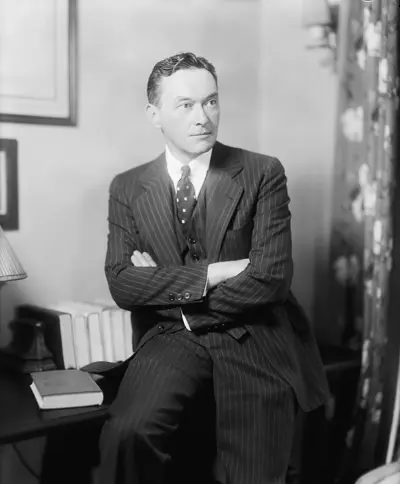
Walter Lippmann was an American writer, reporter and political commentator. With a career spanning 60 years he is famous for being among the first to introduce the concept of Cold War, coining the term "stereotype" in the modern psychological meaning, as well as critiquing media and democracy in his newspaper column and several books, most notably his 1922 book Public Opinion.
