Plutarco Elias Calles Quotes
From this day the presidency of Mexico ends. The dictatorship of Mexico begins.
Plutarco Elias Calles, 1877-1945, President and Dictator of Mexico, Statement to the Press, 1927
Sourced by: Eigen's Political and Historical Quotations

Commenting on the fact that China was eliminating it's Constitutional requirement that government leadership had to change every 10 years.


Porfirio Diaz - the longtime dictator of Mexico stole the election of 1910 and had his opponent Francisco Madero arrested and imprisoned. Madero got out, crossed the border to San Antonio, and issued this declaration which started the Mexican Revolution. See {613620} for the statement that declared the Revolution.

This is the argument—an essence of Fascism—of every dictator from Julius Caesar onward. See {640792} for more of his views on dictators.


Lippmann was the most influential pundit of the time. Roosevelt had just been elected but had not yet assumed office. The country was in the midst of the Great Depression and many communities had 80% unemployment. Banks had failed, people were starving, and many people thought that democracy was just not suited to deal with such severe problems. Roosevelt, however rejected the advice and always worked through the Congress and in so doing saved democracy in America.


Soon he had the power of a dictator but he didn’t force his will on the vast majority of the Cubans. His decrees made all the wealthy and the cronies of the dictator Batista outraged and most of them left Cuba. He was a dynamic demagogue and the people handed him dictatorial powers which he did not reject. He was so popular that he was the only leader in the Americas who would give 4 hour speeches and move through the streets without any bodyguards until the United States and dissident expatriates tried to assassinate him. With all that popularity, none the less he would not allow open criticism of his regime and jailed many political opponents. So he indeed became a dictator but never needed the machine gun to maintain power.


At the time of this statement most people thought that Bush was joking. But by the end of his Presidency many looked back on the quote and thought that Bush had such preferences. He unilaterally took the country into the Iraq War and assumed Presidential Powers that no other president had ever attempted. Most serious, his administration actually took the formal legal position that the President did not have to obey the law if he unilaterally thought that it was not in the nation’s interest from the point of view of the Commander in Chief. So many debate whether this quotation was a light hearted joke of a harbinger of his real feelings about the Presidency.


Roosevelt, after refusing to run for a third term in 1908, decided to run in 1912:

Lev Davidovich Bronstein


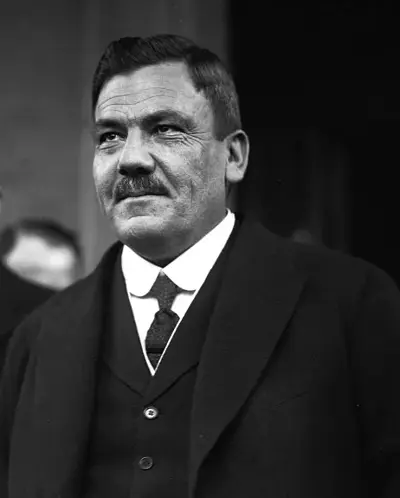
Plutarco Elías Calles was a Mexican military general and politician. He was the powerful interior minister under President Álvaro Obregón, who chose Calles as his successor. The 1924 Calles presidential campaign was the first populist presidential campaign in Mexico's history, as he called for land redistribution and promised equal justice, more education, additional labour rights, and democratic governance. After Calles' populist phase (1924–1926) he ushered in a state atheism phase (1926–1928), ushering a period of persecution against Catholics. After leaving office he continued to be the dominant leader from 1928 to 1935, a period known as the Maximato, after a title Calles awarded to himself, Jefe Máximo (Maximum Chief) of the Revolution. Calles is most noted for his implementation of anti-Catholic laws in the Mexican constitution. This led to the Cristero War, a civil war involving Catholics opposed to the administration. Calles also founded the Institutional Revolutionary Party in 1929. The party had ensured political stability in the wake of the assassination of president-elect Alvaro Obregón in 1928. In its two subsequent incarnations, it held power continuously from 1929 to 2000.
