Napoleon Bonaparte Quotes
This year has begun hopefully for right thinkers. After all these centuries of feudal barbarism and political slavery, it is surprising to see how the word of 'liberty' sets minds on fire.
Bonaparte, Napoleon. Napoleon's Letters. Translated by J. M. Thompson, J.M. Dent & Sons, 1934, p. 12.

The glorious spectacle of eighteen millions of people, struggling to burst their chains and be free.
The entire speech was translated into Spanish and read to great applause to Latin American revolutionary regiments.


Later changed the name to The Emancipator. Many are surprised that a Southern State would have had such strong abolitionist sentiment so early, but East Tennessee was a hotbed of abolition. See {614117} and {614069}

See {613949} for the Governor’s letter to George Washington.

Austin, seeking support for Texas independence and freedom, appealed, not to the economic or territorial benefits for, but to their ideals to aid another people obtain liberty. America has almost been unique among nations in that lives and treasure has been spent to aid others obtain liberty with no material benift to the country. While it is true that we have not supported ALL efforts to obtain freedom (Haiti being the most egregious example) there are many causes in which America assisted for no material reqard.


This prophecy written in the later years of Jefferson’s life turned out to be all too true. St. Domingo was an Island in the Caribbean where slavery produced a bloody war. The American Civil War would be far worse.
In 1905, she and her husband—young, intellectual middle class, revolutionists from Moscow—escaped from the Czar’s secret police and emigrated to America where until 1917, she feared assassination by Czarist agents in America. After the Civil Rights Act and the Voting Rights Act were passed, she felt that all her utopian, communist dreams had been fulfilled--in America. But Russia, in many ways, were as bad then as in the days of the Czars. See {634475} and {634476} for her views on communism. Many of the American “leftist communists” were great admirers and lovers of America except for the legal and governmental support of segregation. When that went, America was their ideal.


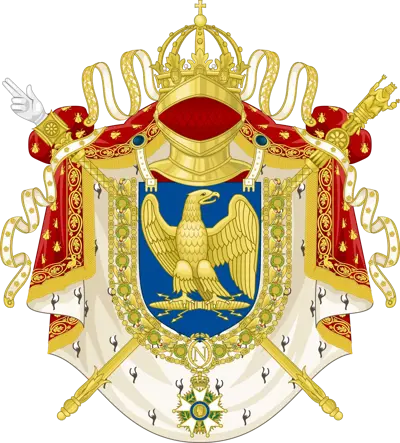
Napoléon Bonaparte was a French military and political leader of Corsican descent. He rose to prominence during the French Revolution and led several successful campaigns during the Revolutionary Wars. As Napoleon I, he was Emperor of the French from 1804 until 1814, and again in 1815. Napoleon dominated European and global affairs for more than a decade while leading France against a series of coalitions in the Napoleonic Wars. He won most of these wars and the vast majority of his battles, building a large empire that ruled over continental Europe before its final collapse in 1815. One of the greatest commanders in history, his wars and campaigns are studied at military schools worldwide. He remains one of the most celebrated and controversial political figures in human history.
