John Cabell Breckinridge Quotes
This has been a magnificent epic. In God’s name let it not terminate in farce.
Lee had been defeated at Appomattox, the South was economically and militarily beaten. Lee and the Southern Cabinet wanted to negotiate terms of surrender, but Confederate President Jefferson Davis was at the time somewhat delusional about the situation and wanted to reach the scattered remnants of two small Confederate armies and continue the war via conventional and Guerrilla warfare. Lee wrote to Davis arguing against continuing the war. Breckenridge was assigned the task of persuading Davis to end the war effort honorably and authorize the remaining Confederate generals to negotiate peace terms.
John Cabell Breckinridge, 1821-1875, Vice President of the United States (Democrat), Confederate General and Secretary of War, Statement to Confederate President Jefferson Davis, 1965
Sourced by: Eigen's Political and Historical Quotations

Eggleston was an accomplished writer who had served in the Confederate army of the Civil War. 20 year after the war he wrote a series of articles for the prestigious Northern Atlantic Monthly trying to convey the war from the Southerner’s point of view.

Eggleston was an accomplished writer who had served in the Confederate army of the Civil War. 20 year after the war he wrote a series of articles for the prestigious Northern Atlantic Monthly trying to convey the war from the Southerner’s point of view. Here he reveals that the Confederacy had developed a culture of positivism about winning the Civil War in which it was unpatriotic to consider reality. This caused the war to go on longer than was rational from a Southern military and economic point of view.

Lee was trying to negotiate a peace treaty as a part of his his potential surrender. However, Grant would not be drawn into that, Lee was NOT the government of the Confederacy, and Grant had served with him earlier in the Mexican War and knew he was not a fanatic on teh subject of slavery and race as most of the Southern leaders were. They werenthe ones who would have to be captured or driven to surrender. Grant could have gotten authoirioty as he was in almost real time contact with President Lincoln by telegraph. However, neither wanted to negotiate peace with Lee. Instead, Grant gave Lee and his men incredibly gracious termsof surrender which he and Lincoln hoped would casue the avarage Southern soldiers to feel better about surrender for although Lee's was the largest Confederate Army, there were still others out there that had to be dealt with,


Sherman had friends in the South and he saw rebellion and war coming. Most Southerners had a romanticized view of war and were so wrapped up in trying to preserve their economic and cultural way of life that they did not think through the implications of such a war. After and during the war, he was particularly angry with the Southerners who had brought such terrible casualties and destruction upon the land and its people.

Milosevic was explaining the events that led to civil war in Yugoslavia

There is some dispute over the exact date of this document. September 14 is given by some.

This was the same man who as a Senator only 4 years before threatened the North that the South was economically and militarily invincible.

Generally after civil wars there have been extensive reprisals and trials of the winning side against the losing one. Lincoln was determined that this pattern not be followed as the bloody war was coming to an end. Ironically, Andrew Johnson, Lincoln’s successor and a Southerner, was, together with some of the Radical Republicans, in favor of trying many of the Southern leaders for treason and rebellion. Lincoln’s view however and that of the moderate members of Congress prevailed. However, the Southern Whites generally would not comply with the Constitutional Amendments and laws regarding the role of the Negro, and Johnson was very sympathetic to their racism which led to a conflict between Johnson and Congress.

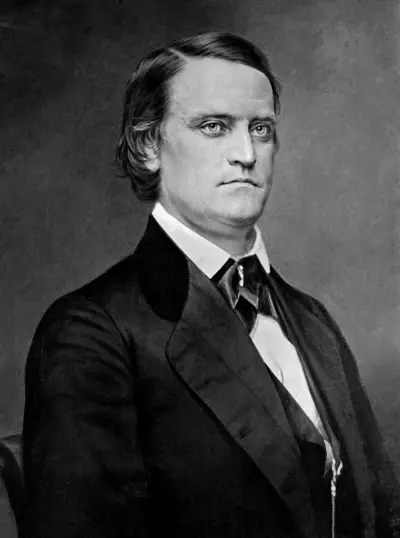
John Cabell Breckinridge was an American lawyer, politician, and soldier. He represented Kentucky in both houses of Congress and became the 14th and youngest-ever Vice President of the United States. Serving from 1857 to 1861, he took office at the age of 36. He was a member of the Democratic Party, and served in the U.S. Senate during the outbreak of the American Civil War, but was expelled after joining the Confederate Army. He was appointed Confederate Secretary of War in 1865.
