George Cary Eggleston Quotes
The coming of ultimate failure we saw clearly enough, but the future beyond was a blank. The subject was naturally not a pleasant one, and by common consent it was always avoided in conversation, until at last we learned to avoid it in thought as well. We waited gloomily for the end, but did not care particularly to speculate upon the question when and how the end was to come.
Eggleston was an accomplished writer who had served in the Confederate army of the Civil War. 20 year after the war he wrote a series of articles for the prestigious Northern Atlantic Monthly trying to convey the war from the Southerner’s point of view.
George Cary Eggleston, 1839-1911, Writer & Confederate Soldier, “A Rebel's Recollections”, The Atlantic Monthly, 1874
Sourced by: Eigen's Political and Historical Quotations

Eggleston was an accomplished writer who had served in the Confederate army of the Civil War. 20 year after the war he wrote a series of articles for the prestigious Northern Atlantic Monthly trying to convey the war from the Southerner’s point of view. Here he reveals that the Confederacy had developed a culture of positivism about winning the Civil War in which it was unpatriotic to consider reality. This caused the war to go on longer than was rational from a Southern military and economic point of view.


This quotation is fascinating because it illustrates the degree to which the Southern people censored themselves on what in most cultures would be morale issues. In many ways the ability to ignore reality made it easier for the Confederate government to operate, but distorted the decisions that were made. Arguably, in most other cultures, public opinion on the reality of the situation would have brought the war to an end sooner and ironically on far better terms than they ended up with. Eggleston was an accomplished writer who had served in the Confederate army of the Civil War. 20 year after the war he wrote a series of articles for the prestigious Northern Atlantic Monthly trying to convey the war from the Southerner’s point of view.


Lee had been defeated at Appomattox, the South was economically and militarily beaten. Lee and the Southern Cabinet wanted to negotiate terms of surrender, but Confederate President Jefferson Davis was at the time somewhat delusional about the situation and wanted to reach the scattered remnants of two small Confederate armies and continue the war via conventional and Guerrilla warfare. Lee wrote to Davis arguing against continuing the war. Breckenridge was assigned the task of persuading Davis to end the war effort honorably and authorize the remaining Confederate generals to negotiate peace terms.


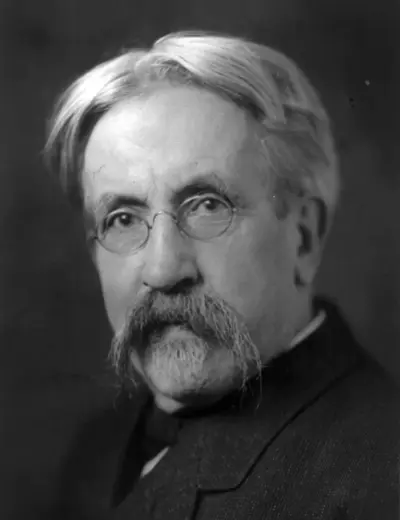
George Cary Eggleston American author and brother of fellow author Edward Eggleston (1837–1902). Sons of Joseph Cary Eggleston and Mary Jane Craig. After the American Civil War he published a serialized account of his time as a Confederate soldier in The Atlantic Monthly. These serialized articles were later collected and expanded upon and published under the title "A Rebel's Recollections."
