Henry David Thoreau Quotes
This fair homestead has fallen to us, and how little have we done to improve it, how little have we cleared and hedged and ditched! We are too inclined to go hence to a "better land," without lifting a finger, as our farmers are moving to the Ohio soil; but would it not be more heroic and faithful to till and redeem this New England soil of the world?
Thoreau, Henry David. The Journal of Henry David Thoreau. Edited by Bradford Torrey and Francis H. Allen, vol. 1, Houghton Mifflin, 1906.


The Depression had 25% unemployment and many people lacked even food to eat. Meanwhile, there was a huge amount of unused, idle land in California.

The emergency was what was called the “Dust Bow” which was a period of severe dust storms causing major ecological and agricultural damage to American and Canadian prairie lands in the 1930s. Over 350,000 people left the Great Plains. The phenomenon was caused by severe drought combined with a failure to apply dry land farming methods to prevent wind erosion. What makes this quotation important is that it illustrates a remarkable practice of Mrs. Roosevelt that no other first lady as every done. Here the First Lady of a sitting President was overtly whipping up public opinion to complain that the government, led by her husband, was doing nothing to cope with a national emergency. This was very common and Mrs. Roosevelt was way out ahead of the President and his administration on most issues of the day. The President seemed to like the idea and it may have been one of the great public strategies of a Presidency. The First Lady would publicly advocate major reforms. The President could then observe the public reaction, judge the newspaper and pundit pronouncements, see how different special interests reacted. Then he could decide to embrace the reform or ignore it saying that it was just the opinion of his very independent wife. FDR had a very strong ego and had no problem with his wife publicly criticizing him.


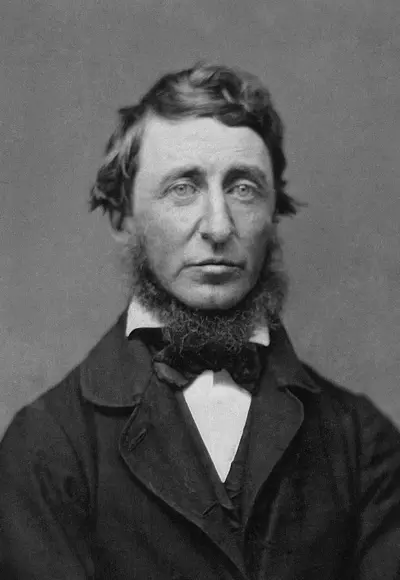
Henry David Thoreau was an American naturalist, essayist, poet, and philosopher. A leading transcendentalist, he is best known for his book Walden, a reflection upon simple living in natural surroundings, and his essay "Civil Disobedience" (originally published as "Resistance to Civil Government"), an argument for disobedience to an unjust state.
