Thomas Graves Quotes
They can lie under the land and upon observing a vessel or two unguarded dart upon them suddenly and carry them off even in sight of the King’s ships.
The patriots did not have any large muti-deck warships but outfitted fast schooners with four small cannon. The schooners had flat bottoms and could navigate in shallow water where the large British warships dared not sail. George Washington made very effective use of his navy interdicting supplies and interfering with truth movements.
Thomas Graves, 1725–1802, British Admiral in America During the Revolution, 1775
Sourced by: Eigen's Political and Historical Quotations

Many people are surprised that Washington had a small navy, and he made very effective use of it. He had 8 schooners ranging from 40-80 tons, each armed with 4-10 cannon and manned by overly large crews (for sailing and firing the guns at the same time) of volunteer expert seamen from Marblehead and Beverly. However, he used his ships very strategically. The British were blockading Boston {636957} yet they themselves had to be resupplied from England or Canada or by small boats to their various military encampments and ships around Boston. It was this resupply and troop movement that Washington interdicted. In a sense, he blockaded the blockaders. . Of the 35 supply ships the British sent to Boston in 1775, only 8 got through Washington’s Navy. Note that Washington ordered offensive operations in the latter part of 1775, before the hostilities of 1776.

David Bushnell, 1740–1824, was a student at Yale University where he developed the first submarine used in warfare. While at Yale, Bushnell proved that gunpowder could be exploded under water. He also made the first time bomb. He combined these ideas by building the Turtle which was designed to attack ships by attaching a time bomb to their hulls, while using a hand powered drill and ship auger bit to penetrate the hulls. He used the Turtle in attempts to attack British ships which were blockading New York Harbor in the summer of 1776. His efforts failed every time because the Turtle's boring device was unable to penetrate the copper sheeting lining in the ships' hulls which was designed to protect against parasites in their previous station, the Caribbean. (From Wikipedia)

This is another example of the preparation that the American patriots were making before 1776 for the coming Revolutionary War. In this case they were urging the arming of ships. There were plenty of ships, and it was a matter of building or buying cannon and mounting them on the decks of the ships. While these were no match for a British Warship in a one-to-one duel, they could be effective against British Smaller Ships that could navigate the shoals, coasts and inlets where the large vessels dared not navigate. This foresight gave George Washington a small navy which he made very good use of. He had 8 schooners ranging from 40-80 tons, each armed with 4-10 cannon and manned by overly large crews (for sailing and firing the guns at the same time) of volunteer expert seamen from Marblehead and Beverly. Of the 35 supply ships the British sent to Boston in 1775, only 8 got through Washington’s Navy. Also note the form of the Continental Congress Resolutions. In effect they mandated nothing as there really was no federal government. Each colony was sovereign, so resolutions were suggestive only with the important decisions all left to the individual colonies and their various governments as some of the colonies had very strong local governments which made all the important decisions.

The sloop Margaretta was escorting 2 small merchant vessels came into the port of Machias, Massachusetts to purchase some lumber and firewood. However the commanding officer of Margaretta did not like the terms of the negotiations and threatened the town. An aroused and angry group of patriots then boarded and attacked the two merchant ships. The commander of Margaretta then maneuvered out of the port having lost the two small ships. But the Patriots were angry with the commander of the sloop and being excellent seamen who knew the local waters, used one of the merchant ships and a small local vessel to chase down the Naval sloop. They then boarded and captured Margaretta and fatally wounded the commander, James Moore. While Lexington was the first land victory for the patriots, this was the first sea victory and the Margaretta was the first British warship that was captured by the Patriots.


A local pilot who knew the local waters was necessary to help a large ship to dock in a port. Most of the pilots were patriots and those who weren’t were intimidated by the Continental Congress and the patriots in the community. At this point there was no formal battles yet of the Revolution. The British authorities were really angered that they could not safely land a British ship in the ports of their own colonies. This is another example of the American Revolution starting before the battles of 1776.


This quotation was the beginning of a struggle between Congress and the Presidency over war powers. In this case, President Jefferson had sent a squadron of American ships to protect American Shipping from Arab Corsairs who preyed on shipping and captured crews and passengers of all nations to hold for ransom or put into slavery. The American ships, instead of only providing defense, attacked some of the ships of the Bey and freed a captured American frigate and crew. Jefferson acknowledged that the act was a grey area and asked for authority more authority for the Executive Branch to initiate action. The balance of authority for war and/or defense has been struggled over ever since.

There is disagreement amongst historians as to whether or not the atrocities attributed to the retreating British troops were actually true. There are two other possibilities. First, this report was made only a week after the battle itself and less than that since the alleged atrocities would take place as the British retreated. There were certainly all kinds of rumors with information passed from person to person with no modern means of documentation. The Provisional Congress may have sincerely thought that all the events occurred but they may have been the result of inadvertent exaggeration. Then there is the possibility that in order to fire up the Americans to join the war, some or all of the atrocity reports were deliberately fabricated. It would only take two or three delegates to agree on such a strategy and they could “confirm” each other’s accounts of the happenings. Of course it might all be true. However, as the British retreated to Boston where they had reinforcements, they did not have a lot of time for malicious atrocities. All along the route, Minutemen, local farmers and townspeople continued the attack against the British. By the time the British soldiers reached Boston, 73 British solders were dead and 174 more were wounded. In war truth does not have the respect that it usually does. See {626632}.


In 1786 the Barbary Pirates demanded bribes so as not to seize American ships. England and France customarily paid the bribes. Thomas Jefferson proposed to build a navy and attack the pirates. However, there was no American navy at the time, Adams counseled a different course and in January of 1787 they signed a “pact” with Morocco whereby America paid for protection.

Months after the Tonkin Gulf incident, the President complained about the reliability of the information he had gotten from the navy, The escalaton of the Vietnam War was the result of Johnson acting on this information.

Mad Anthony Wayne. The quotation may be apocryphal, as solid, multiple confirmation has never been found.

Washington and his staff had throughout the Revolution wanted to enlist Negroes but were thwarted by the Southern and conservative blocs of the Continental Congress when they tried it in the South. However, they finally succeeded in Rhode Island. Other states followed when it was clear that the Rhode Island experiment had been successful. See {614120} for the policy statement of the legislature and {614119} for the motto and a picture of the Negro regiment. This was however not the first Black military unit in North America. The Loyalist Governor of Virginia had formed a regiment comprised of slaves who he emancipated. See {636965}.

In 1930, Japan, Britain, and the United States had signed an agreement that submarines would not sink merchant vessels without having first placed passengers and crew in a place of safety. However, when Japan attacked Pearl Harbor and bombed civilians as well as military and had a pattern of bombing and shelling civilians in China, the U. S. took the position that Japan had abrogated all treaties and therefore abrogated the 1930 treaty. It was more of a symbolic gesture as at the time the American forces were in no shape to attack Japanese merchant shipping though later in the war, it became material. By that time, the Japanese had murdered American prisoners of war on the Bataan Death March and elsewhere and had slaughtered civilians in the Philippines and all the other territories that they invaded. The niceties of the 1930 treaty was one of the first casualties of Japanese aggression.

Clark’s men had English Colonel Hamilton under siege by making him think there were many more Americans in Clarks army than the real 180 or so. He tried to get Hamilton to surrender by threatening if they had to take the fort they would treat Hamilton and the British as murderers—Hamilton had paid hostile Indians for American scalps. At that point a party of Clark’s men arrived with 4 or 5 Indian prisoners who had been captured raiding
civilian farms. After the Indians were executed, Hamilton agreed to surrender.

There was a significant opposition in England who opposed the war against the rebellious colonies. Fox was one of the most outspoken who thought that England would not win.

In the 18th Century, the Islamic Barbary States combined their religious beliefs for Jihad against non believers with a classic criminal enterprise. They would authorize cosairs to outfit ships and attack Christian merchant ships on the high seas. They would capture the ship and the cargo, which would be split with the ruler of the country. The crew and passengers would by “rented out” as slaves until they would be ransomed, the proceeds of which would also be shared. To motivate a larger ransom, the captives were regularly tortured as well as worked almost to death. The Barbary Pirates encouraged the “slaves” to write to their relatives, friends and governments to try and raise the ransom. O’Brien’s ship was captured in 1785. He had been a slave for 4 years when he wrote this. See {623704} for a quote from a letter he sent Congress. Finally, after 10 years, O’Brien and those of his crew that were still alive were finally freed. O’Brien’s unusual experience and knowledge of the Barbary States qualified him as an expert and he was then appointed Consul-General to Algiers. Individual Christian countries were offered a “treaty” whereby for an annual payment of tribute to the Barbary country, the corsairs of that country would not attack ships flying their flag. The Christian country had to make 4 different tribute payments to each of the Barbary nations. Most of the European powers were paying the tribute even though some could easily defeat the Corsair navies in a war. The cost of outfitting a fleet for war was much more costly than paying the tribute. The new nation of the United States was good pickings for the Barbary pilots and there was a period of several decades where the Americans had to create a policy to pay tribute or go to war. At different times America did both.
In the 18th Century, the Islamic Barbary States combined their religious beliefs for Jihad against non believers with a classic criminal enterprise. They would authorize cosairs to outfit ships and attack Christian merchant ships on the high seas. They would capture the ship and the cargo, which would be split with the ruler of the country. The crew and passengers would by “rented out” as slaves until they would be ransomed, the proceeds of which would also be shared. To motivate a larger ransom, the captives were regularly tortured as well as worked almost to death. The Barbary Pirates encouraged the “slaves” to write to their relatives, friends and governments to try and raise the ransom. O’Brien’s ship was captured in 1785. He had been a slave for 4 years when he wrote this. See for a quote from a letter he sent Congress. Finally, after 10 years, O’Brien and those of his crew that were still alive were finally freed. O’Brien’s unusual experience and knowledge of the Barbary States qualified him as an expert and he was then appointed Consul-General to Algiers. Individual Christian countries were offered a “treaty” whereby for an annual payment of tribute to the Barbary country, the corsairs of that country would not attack ships flying their flag. The Christian country had to make 4 different tribute payments to each of the Barbary nations. Most of the European powers were paying the tribute even though some could easily defeat the Corsair navies in a war. The cost of outfitting a fleet for war was much more costly than paying the tribute. The new nation of the United States was good pickings for the Barbary pilots and there was a period of several decades where the Americans had to create a policy to pay tribute or go to war. At different times America did both.

He became one of the great heroes of the American navy and this statement is taught to every American sailor. Actually, although a very good Captain, in the battle with the Shannon, he made a number of mistakes which was unusual for him, but the Shannon won the battle. The American sailors did not give up the ship, but they were overcome with one of the highest casualty rates of any sea battle of the time. Had Lawrence lived—he dies of infection from his wounds—he probably would have faced a board of inquiry or a court martial, but his death turned him into an American hero. See {625129}. Commodore Perry, a friend of Lawrence, had “Don’t Give Up The Ship” sewn on to his battle flag, and the motto has been part of the United States Navy ever since.
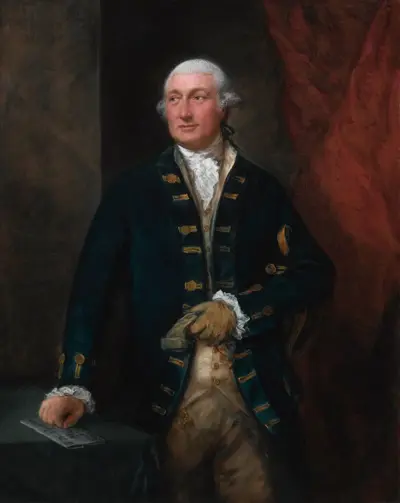
Admiral Thomas Graves, 1st Baron Graves, KB was a British officer of the Royal Navy and a colonial official. He served in the Seven Years' War and the American War of Independence. He was also the Commodore-Governor of Newfoundland for a period of time.
