Denis Kearney Quotes
They are imported by companies, controlled as serfs, worked like slaves, and at last go back to China with all their earnings. They are in every place, they seem to have no sex. Boys work, girls work; it is all alike to them.
Kearney, Denis, and H. L. Knight. Appeal from California: The Chinese Invasion: Workingmen's Address. Workingmen's Party of California, 1878.


Ruffin is more widely known as the man who fired the first shot of the Civil War.


The white skilled laborers of the North were not the only ones who found slavery deleterious to their economic well being. The complaints to the Carolina legislature produced a finding as early as 1744 that whites were adversely affected.

Indian and Black slaves were outlawed very early in Connecticut, not on moral grounds of concern for the Indians and Blacks, but because of the negative effects on the white poor. Why would anyone pay the poor any more than the amortization costs of a slave? Therefore there was no way a poor white could make a living wage if slavery were to coexist.

The cotton industry and slavery were a very important part of the economy of Providence, RI. The Rhode Island cotton mills were supplied by Southern cotton produced by slaves and carried from the South on Rhode Island ships. Many of the southern slaves were kidnapped from Africa from Rhode Island slave trading ships. When the slave trade was made illegal, Brown was the first slave trader prosecuted. His brother, Moses Brown, a vehement abolitionist was one of the men who brought the prosecution.
This was written under the name of Ragnar Redbeard. There are a few scholars who believe that it was written by Jack London, but most credit Desmond.

This is one of the major reasons that Slavery was so hard to end in the South. At the time, the dollar value of the Southern slaves was greater than the value of all the land, factories, inventory, and capital equipment of the South. Slaves were not only capital, they were the largest component of Southern capital and Southern wealth. There were numerous ideas of paying slave owners for the freedom of their slaves, and if this was done, it would have been far less expensive in money alone than the Civil War cost. However, the Southern leadership, like Fitzhugh, were totally intransient with culture and customs—indeed the Southern concept of manhood—was dependent in Slavery. The result was that no compensation was paid to slave owners and the South was impoverished as a result of its capital loss and it would not recover for 150 years.

The Southeastern states were in a triple bind regarding slavery. The slave trade was ended so new slaves could not be imported. The existing slaves commanded much higher prices in the West and were sold to those destinations. Meanwhile, the European abject poverty provided a ready source of immigrants who would work for wages that were not much more than the cost of keeping and amortizing a slave. At the beginning of the Civil War, the death knell of Southeastern slavery had already been ringing.
This was the first public outing of Thomas Jefferson’s sexual relationship with his slave Sally Hemmings.


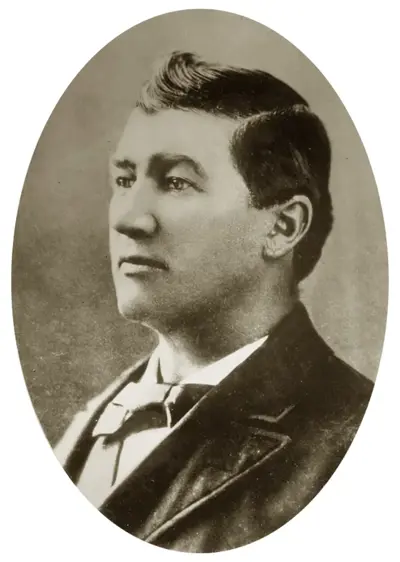
Denis Kearney (1847–1907) was a California labor leader from Ireland who was active in the late 19th century and was known for his racist views about Chinese immigrants. Called "a demagogue of extraordinary power," he frequently gave long and caustic speeches that focused on four general topics: contempt for the press, for capitalists, for politicians, and for Chinese immigrants. A leader of the Workingmen's Party of California, he is known for ending all of his speeches with the sentence "And whatever happens, the Chinese must go" (a conscious inspiration from Roman senator Cato the Elder's fame for ending all speeches with ceterum autem censeo Carthaginem esse delendam - "Furthermore, I consider that Carthage must be destroyed".)
