Khurshid Kasuri Quotes
These tribal border areas between Pakistan and Afghanistan have never been tamed as it were.
There are areas of Pakistan which belong to Pakistan in name and on a map only. Some have wanted independence to preserve the power of local war lords and others to preserve traditional ways of life. Still others have looked at the corruption and instability of Pakistan and wanted to avoid it.
Khurshid Kasuri, Foreign Minister of Pakistan, Interview, CNN Late Edition, September 17, 2006
Sourced by: Eigen's Political and Historical Quotations


They were corresponding about the anti-Chinese movement in America and the attempt to exclude Chinese from immigration to the United States and ethnically cleanse the country.


What makes the situation even more complicated is that most of the land of the Middle East has been governed by a succession of Empires who may have drawn the lines differently from the previous governing dynasty. For example, the land that is Israel today, has been governed by Egyptians, Greeks, Jews, Romans, various Arab dynasties, Turkey, England, and the Jews again. Turkey governed it for the longest period.


Standing Bear and some other Indians left the Indian territory where the government had assigned their tribe and with an invitation went to live on another Indian reservation designated for another tribe. The Government sent the military police to take the Indians back to the Indian Territory. The Indians claimed that they had the right to live wherever they wanted and did not have to live in the place the government had assigned them. The Indians won and since then, Indians like all other Americans were free to go wherever in the country that they wanted so long as they were not trespassing or violating other laws.


As early as 1933, 14 years before Indian independence, there was a movement for a separate Muslim nation within India. Ironically, Hindu India was never a nation in any sense of the word, but was a series of independent principalities much like Italy before its unification. However, with the Muslim conquest of the various Indian states, there was a central authority, ruler, and nation for the first time. Later the Muslims had to argue that India was not a country when it was they who had made it such. When the Muslim Emperors were in power, they argued that India was one country under their authority. But when they lost power, the Muslims argued the other side of the issue.


Some Tibetans believe that the Han Chinese will indeed develop the area, but will in the process change the nature of the area and its culture—that the Han culture will dominate just as initially minority cultures have dominated and transformed South Africa, India, Canada and even the United States. Of course, modernization per se changes a culture radically.


One of the reasons that foreign superpowers have failed in their efforts in Afghanistan is that they tried to install and work through a central, national government. See {634657} and {634659}.
The Russians had invaded Afghanistan and, like the earlier invaders who had also failed, they did not understand the people or their culture. (See {634659}). They tried to impose a centralized Communist government, not realizing that the Afghanistan people were not experienced with any kind of central government. There was some tribal structure but that was mostly a traditional consensus process. Most Afghan men were the “kings” of their own families and did not respond to any other governance though they can be nfluenced by tribal leaders, warlords, and imams.


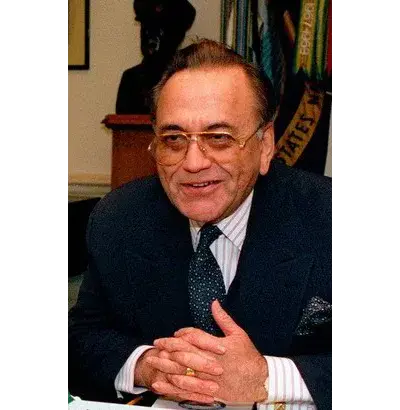
Khurshid Mahmud Kasuri, is a Pakistani politician and writer who served as the Minister of Foreign Affairs of Pakistan between November 2002 until November 2007. He is the Senior Advisor on Political and International Affairs and Chairman of the Pakistan Tehreek-e-Insaf's Task Force on Kashmir and a member of the Core Committee of the Party. He is also the author of 'Neither a Hawk Nor a Dove'.
