James Burnham Quotes
… half-formed pseudo nations
James Burnham, 1905-1987, Founder, Congress for Cultural Freedom, Director, Political & Psychological Warfare Division, CIA, Description of African Countries, Quoted in The New Criterion, September 2002
Sourced by: Eigen's Political and Historical Quotations


He persuaded many other rulers to join the Indian Union when India became Independent.


Once the Muslims got their separate country, the Buddhists tried to do the same. The disaster of the Pakistan partition was not about to be be repeated so it never happened.
This was written under the name of Ragnar Redbeard. There are a few scholars who believe that it was written by Jack London, but most credit Desmond.


What makes the situation even more complicated is that most of the land of the Middle East has been governed by a succession of Empires who may have drawn the lines differently from the previous governing dynasty. For example, the land that is Israel today, has been governed by Egyptians, Greeks, Jews, Romans, various Arab dynasties, Turkey, England, and the Jews again. Turkey governed it for the longest period.


The Kurdish People do not have a homeland of their own but are minorities of other states—mostly in Turkey and Iraq. There was a “Kurdistan” for a few years but it did not last do to major geopolitical forces. Whereas Barzani is opposed to violence, there are other Kurds who have resorted to vicious terrorism in their quest for a homeland. Kurds represent a wide range of opinion on the best way to create a stat of Kurdistan, but they were at the time, almost unanimous on their desire for independence and the belief in their moral right to have a homeland.
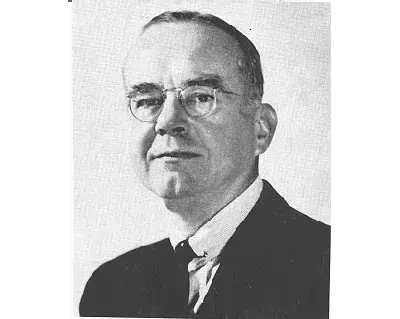
James Burnham was an American philosopher and political theorist. He chaired the philosophy department at New York University; His first book was An Introduction to Philosophical Analysis (1931). Burnham became a prominent Trotskyist activist in the 1930s. He rejected Marxism and became an even more influential theorist of the right as a leader of the American conservative movement. His book The Managerial Revolution, published in 1941, speculated on the future of capitalism. Burnham was an editor and a regular contributor to William F. Buckley's conservative magazine National Review on a variety of topics. He rejected containment of the Soviet Union and called for the rollback of communism worldwide.
