Ernest Andre Gellner Quotes
Just as every girl should have a husband, preferably her own, so every culture must have its state, preferably its own.
Ernest Andre Gellner, 1925-1995, French Philosopher and Social Anthropologist, The Coming of Nationalism and Its Interpretation: The Myths of Nation and Class in Mapping the Nation
Sourced by: Eigen's Political and Historical Quotations


At the partition if India into Hindu and Muslim States, what is now Bangladesh, was a part of Pakistan called “East Pakistan” by the Pakistani government. While India became a thriving democracy, Pakistan with its combination of military strongmen and Islamic Fundamentalists did not fare as well and became a very corrupt, undemocratic military nation. East Pakistan was not contiguous with the rest of Pakistan and was culturally quite different and less religiously fundamentalist. While all Pakistanis suffered from poor government, the East Pakistanis fared worse. Finally, they developed their own identity which was suppressed by the military dictators of Pakistan and the Banglas revolted and Bangladesh became and independent nation.

Arguing that the Arabs will never agree willingly to a Jewish state:


The Kurdish People do not have a homeland of their own but are minorities of other states—mostly in Turkey and Iraq. There was a “Kurdistan” for a few years but it did not last do to major geopolitical forces. Whereas Barzani is opposed to violence, there are other Kurds who have resorted to vicious terrorism in their quest for a homeland. Kurds represent a wide range of opinion on the best way to create a stat of Kurdistan, but they were at the time, almost unanimous on their desire for independence and the belief in their moral right to have a homeland.


Once the Muslims got their separate country, the Buddhists tried to do the same. The disaster of the Pakistan partition was not about to be be repeated so it never happened.


He was a Quebec separatist and advocated a separate country.


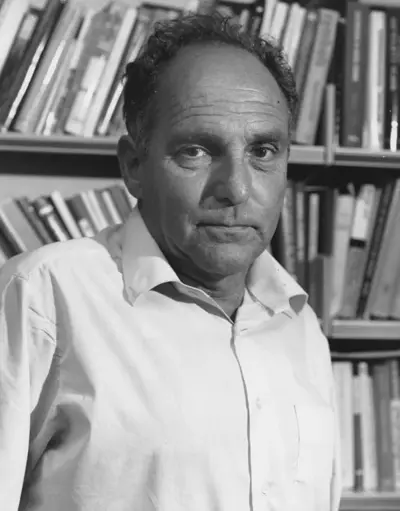
Ernest André Gellner was a British-Czech philosopher and social anthropologist described by The Daily Telegraph, when he died, as one of the world's most vigorous intellectuals, and by The Independent as a "one-man crusader for critical rationalism".
