Julius K. Nyerere Quotes
These are only a few of the reasons why we cannot be expected to be so confident of American non-interference in our affairs as British feel in relation to her own country. For the whole of this past year we have been subjected to pressures from the United States – and from Britain too before the change of Government – in relation to events in this country, particularly in relation to the post-revolutionary period in Zanzibar …. I am sure you will realize that there has been a reaction against the complacency with which we viewed our security questions before the mutiny of January this year. It may be that in consequence we see dangers where none exist, but if so this is a fault on the right side under the circumstances. Africa is going through an extremely difficult period of transition, and coup d’etats are not things in which any African Government can afford to take a merely academic interest
Julius K. Nyerere, 1922-1999, President and Prime Minister of Tanzania, Letter to British Prime Minister Harold Wilson, December 27, 1964
Sourced by: Eigen's Political and Historical Quotations

The “help” was a covert CIA 1954 operation that overthrew the government

The coup which deposed and then murdered Patrice Lumumba had the help of the American CIA and French Army. Lumumba was a Marxist and Mobutu appeared to be an anti-Communist. The corruption under Lumumba was typical of most African counties but Lumumba himself was an ideologue and but not personally dishonest. Under Mobuto, the Congo—renamed Zaire—became the most corrupt nation on earth, and Mobuto, one of the richest men in the world. Everything he complained of to justify is coup, he himself was guilty of when he consolidated power—moreso than any other 20th century world leader.

Duke of Northumberland. When King James VI of poorer Scotland assumed the English throne (as James I) most of the Scots, and especially the Highlanders, were anti-English and concerned about the integrity and independence of Scotland. Together with dissident Englishmen, Dudley foresaw the schism that was to engulf England and Scotland in bloody civil war.

Indeed, many of the countries went communist as Kennan predicted.


The French Revolution with the rise of Napoleon was a classic example. The American Revolution was an exception.

The President was Woodrow Wilson and the Peace Conference was that at the end of WWI. While the right of self determination is broadly accepted in American society, it was not always so.


This was the time of the rise of Hitler and efforts of communist revolutionary activity alike.


Many people think that the French Revolution was spontaneous. Some events at the beginning were, but de Gouges and other political observers cold see that disaster was looming.


20th century Africa and South America were particularly good examples.


This was only 6 years after the Russian Revolution. Communist Russia had extended its influence to much of the world without firing a shot. To many, communism looked like the future. The Russian inability to make communism work economically in the next 70 years destroyed most of its influence.
The justification was a sham. He forced the President to resign, appointed a new President who then fired the Prime Minister and dissolved Parliament.

In early America, the political parties had their own newspapers where “truth” was not an important journalistic virtue. Red scares and other fears of foreign conspiracies are as old as our nation. In 1798 the Federalists accused Vice President Thomas Jefferson, among others, of being in contact with the foreign conspirators and printed details of a "manufactured" plot to massacre the citizens of Philadelphia in one of their controlled newspapers. The nation was so alarmed that the infamous Alien and Sedition Acts were passed by Congress a few months later. These were probably the greatest infringements on American civil liberties in our history.
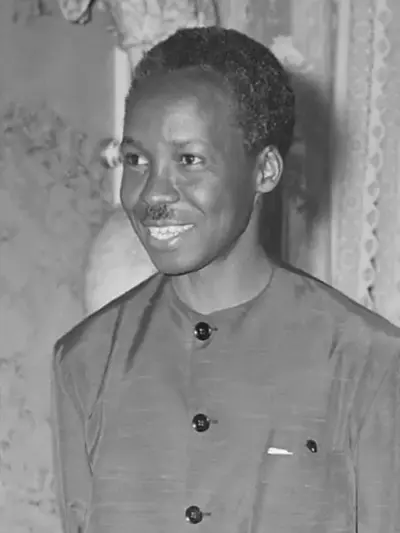
Julius Kambarage Nyerere was a Tanzanian anti-colonial activist, politician, and political theorist. He governed Tanganyika as Prime Minister from 1961 to 1962 and then as President from 1963 to 1964, after which he led its successor state, Tanzania, as President from 1964 to 1985. He was a founding member and chair of the Tanganyika African National Union (TANU) party, and of its successor Chama Cha Mapinduzi, from 1954 to 1990. Ideologically an African nationalist and African socialist, he promoted a political philosophy known as Ujamaa.
