Russell Hornsby Quotes
These are human issues. These are human stories. I think that's why 'Fences' has been able to resonate and been able to hit so many people over the years because it is just that. You can't run away from the racial specifics of it, but that's just a part of it.
Hornsby, Russell. Interview. BUILD Series, Yahoo!, 20 Dec. 2016.


At the time, racial discrimination was so rampant in America that when one of the units of Pepsi Cola, under the leadership of Walter Mack, hired Emmons to sell to Black communities, the Black residents of Northern communities were so unused to seeing Blacks in a “white collar” job, that they were treated as celebrities. Emmons and a few other black salesmen had incredible results yet despite that, the practice did not grow at the time as there were too many white executives who were so prejudiced that the practice was not increased after Mack retired. This short quotation paints a good picture of the nature of racial job discrimination in the North prior to WWII.


What America just could not believe that American Negroes were not satisfied with their second class status. So any organized Negro unrest must be caused by un-American and foreign influences or those of radicals like Socialists. The Socialists were among the first organized political groups to condemn the racism and discrimination of the day. Later, even at the crux of the civil rights movement in the 1960s, most Southerners maintained that all the dissatisfaction and unrest of Negroes was the result of “agitators,” “foreigners,” “socialists,” and “communists.”

Qutb was studying at Greeley College and with some Egyptian friends want to a movie theater. Greeley, even though not in the South, practiced racial discrimination in many of their public accommodations and the Civil Rights Law would not be passed for another 15 years or so. The ticked clerk at first would not sell tickets to the dark skinned Egyptians and when one protested, the owner was called. He ruled that as long as they were not American Blacks, they could enter. But Qutb refused.

Johnson was the first Black man who won the heavyweight championship at a time when racism in America was rampant. Many whites referred to Jeffries as “The Great White Hope” who would take the champion back for the whites. He didn’t and was beaten badly.
Named after penal reformer Johne Howard, 1726-1790. Howard Associations have since been organized in many countries.


Early in his career Grant was a young lieutenant assigned to a Western outpost. His wife was worried about the Indians.


Armstrong rarely commented on politics (see {615854}), but the Governor defying the Supreme Court and not letting his people even go to school with other students was too much for him. He not only made the statement, but he approved it for publication. This shocked many who knew him as an apolitical person. He was particularly distressed with President Eisenhower who although he had warned Faubus that he would enforce the court order and then used federal troops to do so, Eisenhower was a man of action and not rhetoric and his lack of firm public statements overlooked an opportunity to use the Presidential “bully pulpit” and exercise his moral leadership and authority. Many then, and even 50 years later, were not sure where he stood on the issue of school desegregation. See {615852}.


The racial inequality did cause a Black revolution in the 1960s. The arrival and influence of Martin Luther King, at the time Black revolution might have turned violent, and the willingness of a substantial number of whites to implement the Civil Rights revolution functioned as a safety valve so that there was substantial reform towards much more racial equality.
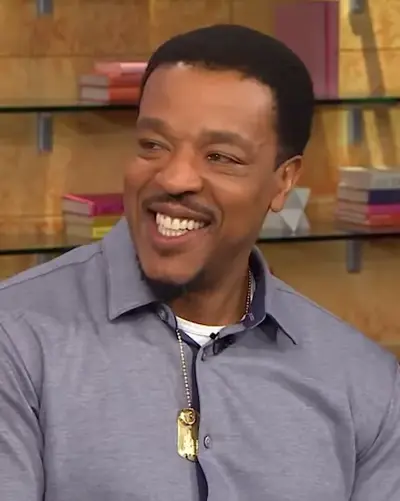
Russell Hornsby is an American actor. He is known for his roles as Edward "Eddie" Sutton on ABC Family's Lincoln Heights, as Luke on the HBO drama In Treatment, as Detective Hank Griffin on the NBC series Grimm, and as Lyons in the movie Fences. He also played Carl Gatewood in the Showtime TV series The Affair.
