Gwen Moore Quotes
There's a huge cost in being bipartisan, a tradition started by Newt Gingrich when he took over the House in 1994 and has continued forward, that you dare not vote against the Republican Party even if you're voting against your own initiatives and your own interests.
Moore, Gwen. Interview. C-SPAN, National Cable Satellite Corporation, 2013.


the Speaker at that time Olympia Snow, a Republican, was one of the great members of Congress who was not partisan and especially so when the interest of the nation was involved. She was known for working with any and all other legislators regardless of political party. When Newt Gingrich became the Speaker of the House, he wanted the Republican caucus to stay together and not work individually with Democrats. Snow and Schroeder however continued to work together. When Snow want to the Senate, she was known for her patriotism and bipartisanship. In 2012, the Republican Party had become so extreme and hyperpartisan, that he left Congress and did not stand for reelection.


Prior to Johnson’s civil rights efforts, the South virtually always voted for Democrats in all elections. The only political competition was for the Democratic Party Primaries. The term “Solid South” meant that it was solid for the Democratic Party. But after the Civil Rights Act was passed in 1964, the racist whites who used to be Democrats switched and joined the genuine traditional conservative and created a Republican Southern majority that was as solid for the GOP as the Democrats had ever enjoyed.


The George W. Bush re-election campaign tactics were so polarizing that the two parties would not work together thereafter and little was accomplished at a time when the Bush administration had led the country into terrible problems. Ironically, what seemed like a brilliant re-election for a Republican Administration in retrospect caused an atmosphere where the voters ousted the Republican control margin in 2006, and by the election of 2008, Bush had the lowest approval rating of any President in history, and many historians felt he had become the worst President in American History.


the largest economic and banking reform in decades The Dodd-Frank reform legislation was very complicated. It was extensively debated including attacks against provisions that were not even in the bill (See {632833}.) Few of the supporters and fewer of the opponents understood the bill. Many members on both sides had not even read the entire bill. It passed.
2012 and 2013 with the Tea Party driving Republicans more to the right under fear of being attacked in their primary elections caused the handful to shrink to 2 or 3. The change stems from the historical fact that the majority of the Democratic racists (mostly of the South) were furious that their party, had passed the Civil Rights Act of 1964 ending legal segregation and institutional racism of the South. The Republicans implemented a “Southern Strategy” by using code words that endorsed Southern racism and this swung the formerly Democratic “Solid” South to the Republican side changing the balance of power for years. The conservative Democrats became Republicans changing the balance in that party. The conservatives starting purging the liberal Republicans and then drove many of the moderates out. Meanwhile, the Democrats, without their conservative wing from the South became more left wing and made things uncomfortable for the remaining conservatives. Just as Tama predicted there were few moderates left to cross over and vote with the other party. Congress became totally dysfunctional.
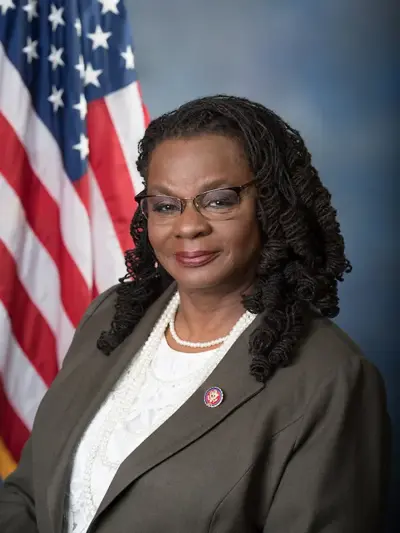
Gwendolynne Sophia Moore is an American politician serving as the U.S. Representative for Wisconsin's 4th congressional district since 2005. In 2016, Moore was elected to serve as Caucus Whip of the Congressional Black Caucus for the 115th United States Congress. She is a member of the Democratic Party. The district is based in Milwaukee and as a result of the 2011 redistricting also includes some nearby Milwaukee County suburbs: Bayside, Brown Deer, Cudahy, Fox Point, Glendale, St. Francis, South Milwaukee, West Milwaukee, Shorewood and Whitefish Bay. She is the first woman to represent the district. She is also the second woman after Tammy Baldwin and the first African-American elected to Congress from Wisconsin.
