Claudette Colvin Quotes
There were many African Americans - many, many stories similar to my story.
Hoose, Phillip. Claudette Colvin: Twice Toward Justice. Farrar, Straus and Giroux, 2009.


Vladimir Lenin. In their quest for world revolution, the Russian Communists had more problems with arguments in the United States whose reforms and economy had produced a very high standard of living. They knew that to effect a revolution, they had to reach the middle class and the intellectuals. They had little economically to attack America with but they were able to attack the United States morally. Even though segregation was legal in America at that time, many Americans thought it immoral. Most of the rest of the world did also. So that was one of the attack points. Since the communists opposed U. S. racial segregation, many Southern segregationists used a perverted logic and accused everyone who opposed segregation of being a communist. In addition to racial segregation, the Communists attacked other forms of discrimination such as anti-Catholic, anti-Asian, and anti-Semitic (See {638737} ) behavior.

The term came to be used by many New York Newspapers.


He and other founders believed that Blacks freed from slavery would still suppress wages for whites and hurt industry. The possibility of intermarriage was also viewed as a moral degeneration. Approximately 15,000 Blacks chose to emigrate.


Pickering referred to Jefferson as the “Negro President” because he believed his presidential power rested on the shoulders of slavery.


Johnson was then Vice President.


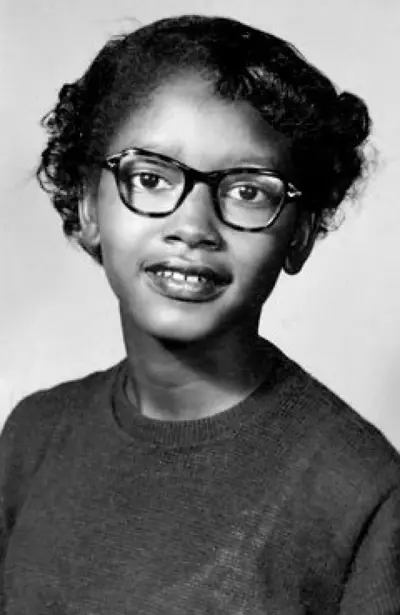
Claudette Colvin is a pioneer of the 1950s civil rights movement and retired nurse aide. On March 2, 1955, she was arrested at the age of 15 in Montgomery, Alabama, for refusing to give up her seat to a white woman on a crowded, segregated bus. This occurred nine months before the more widely known incident in which Rosa Parks, secretary of the local chapter of the National Association for the Advancement of Colored People (NAACP), helped spark the 1955 Montgomery bus boycott.
