James Heckman Quotes
The separate water foundations, park benches, bathrooms and restaurants of the Jim Crow South startled me. These experiences motivated my lifelong study of the status of African Americans and the sources of improvement in that status.
Heckman, James J. "James J. Heckman - Biographical." NobelPrize.org, Nobel Prize Outreach AB, 2000.


Vladimir Lenin. In their quest for world revolution, the Russian Communists had more problems with arguments in the United States whose reforms and economy had produced a very high standard of living. They knew that to effect a revolution, they had to reach the middle class and the intellectuals. They had little economically to attack America with but they were able to attack the United States morally. Even though segregation was legal in America at that time, many Americans thought it immoral. Most of the rest of the world did also. So that was one of the attack points. Since the communists opposed U. S. racial segregation, many Southern segregationists used a perverted logic and accused everyone who opposed segregation of being a communist. In addition to racial segregation, the Communists attacked other forms of discrimination such as anti-Catholic, anti-Asian, and anti-Semitic (See {638737} ) behavior.


Sumner would later become a Senator. However over a century before Brown v. Board of Education finally outlawed segregated schools, Sumner made one of the basic legal arguments that was involved in the case.


Blacks were fighting and dying in WWII. They were equal when they were under fire, but otherwise not. The war was against fascist protagonists whose creed was inequality while the allies were upholding freedom and equality. But making that aspiration a reality was difficult.

The president was commenting on a Donald Trump campaign statement that African American were in the worst shape in history when the reality was just the opposite


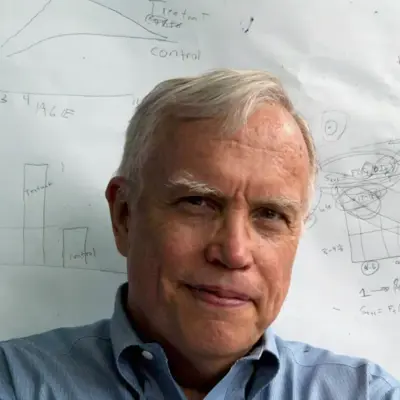
James Joseph Heckman (born 1944) is a Nobel Prize winning American economist who is currently at the University of Chicago, where he is The Henry Schultz Distinguished Service Professor in Economics and the College; Professor at the Harris Graduate School of Public Policy Studies; Director of the Center for the Economics of Human Development (CEHD); and Co-Director of Human Capital and Economic Opportunity (HCEO) Global Working Group. He is also Professor of Law at the Law School, a senior research fellow at the American Bar Foundation, and a research associate at the National Bureau of Economic Research. In 2000, Heckman shared the Nobel Memorial Prize in Economic Sciences with Daniel McFadden, for his pioneering work in econometrics and microeconomics. As of December 2020, according to RePEc, he is the second most influential economist in the world.
