Daniel H. Hill Quotes
There was a nuisance in the service known as the army correspondent.
Hill, Daniel H. "The Battle of South Mountain, or Boonsboro'." Battles and Leaders of the Civil War, edited by Robert Underwood Johnson and Clarence Clough Buel, vol. 2, The Century Co., 1888, p. 574.

In modern times, there have been many incidents of members of the press not supporting the current war effort. Sometimes, it is the greed to get a story, and other times, it is to advocate an alternate strategy. Most often it is a belief that in democracy, only a knowledgeable public can govern the government. The administration or general cannot be relied upon to provide accurate information. Many think The Vietnam War started this problem, but it has been ongoing ever since the Revolution. In the War of 1812, with many Americans dying fighting, other Americans were critiquing the war infuriating the military and the President. Similarly, in all other wars including the Civil War. The relationship between Grant and the Press was as vitriolic as that of the Vietnam War. The war where there was the least conflict between the military and the press was WWII where press were given total access to the front lines without the controls that developed later in the Iraq War.


Steinbeck also served as a journalist as did Earnest Hemmingway and other great American writers. In WWII there was a great deal of censorship and even more self censorship by the press. The result is that many of the U. S. military blunders were covered up on the grounds that it would not be good for the morale of the soldiers to know that their officers had made such tragic mistakes.

The patch over her eye in the photo reflected the loss of one of her eyes when she was covering the civil war in Sri Lanka. She was struck with shrapnel. She continued her reporting despite the great risk. In February 2012, the building she and other journalists were taking shelter in was shelled by government heavy artillery and she and others were killed.


Matthew Brady had a group of 23 photographers who traveled with the Union troops, photographing scenes and making pictures in their portable darkrooms as they went. They were, in effect, the first embedded journalists covering a war. Brady’s corps made 10,000 photographs, many of which are famous to this day. Brady expected the government to buy his photos after the war but Congress would not do so. Brady had to sell his New York studio and go into bankruptcy. In 1875 Congress finally voted him $25,000 but by then his photography business was destroyed and Brady had become an alcoholic a condition from which he died.

Following the sinking of the battleship Maine in Cuba in 1898, Hearst, then a newspaper publisher, dispatched artist Frederic Remington to Cuba to paint war scenes for Hearst's newspapers. Remington could not find any and so cabled Hearst. This was Hearst’s famous reply. Hearst's newspapers then all called for war, and Congress shortly thereafter declared such,


She did not know it at the time but an entire brigade of American volunteers fought for the republicans against the Fascists—It was called the “Abraham Lincoln Brigade”. They believed that the Fascists would have to be stopped and the earlier it could be done the better off the world would be. Many of them died fighting for their own convictions. Millions of more Americans would follow them, fight for their own convictions, and finally defeat the fascists.


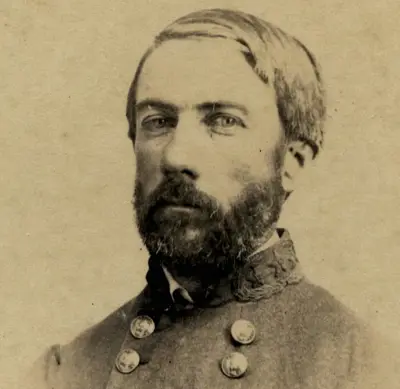
Daniel Harvey Hill was a Confederate general during the American Civil War and a Southern scholar. He is usually referred to as D. H. Hill, in part to distinguish him from unrelated Confederate general A. P. Hill, who served with him in the Army of Northern Virginia.
