David Halberstam Quotes
No one becomes a reporter to make friends, but neither is it pleasant in a situation like the war in Vietnam to find yourself completely at odds with the views of the highest officials of your country. The pessimism of the Saigon press corps was of the most reluctant kind: many of us came to love Vietnam, we saw our friends dying all around us, and we would have liked nothing better than to believe the war was going well and that it would eventually be won. But it was impossible for us to believe those things without denying the evidence of our own senses.... And so we had no alternative but to report the truth....
David Halberstam, 1934-2007, Journalist & Writer, Commentary Magazine, 1965
Sourced by: Eigen's Political and Historical Quotations

The patch over her eye in the photo reflected the loss of one of her eyes when she was covering the civil war in Sri Lanka. She was struck with shrapnel. She continued her reporting despite the great risk. In February 2012, the building she and other journalists were taking shelter in was shelled by government heavy artillery and she and others were killed.

In modern times, there have been many incidents of members of the press not supporting the current war effort. Sometimes, it is the greed to get a story, and other times, it is to advocate an alternate strategy. Most often it is a belief that in democracy, only a knowledgeable public can govern the government. The administration or general cannot be relied upon to provide accurate information. Many think The Vietnam War started this problem, but it has been ongoing ever since the Revolution. In the War of 1812, with many Americans dying fighting, other Americans were critiquing the war infuriating the military and the President. Similarly, in all other wars including the Civil War. The relationship between Grant and the Press was as vitriolic as that of the Vietnam War. The war where there was the least conflict between the military and the press was WWII where press were given total access to the front lines without the controls that developed later in the Iraq War.

Steinbeck also served as a journalist as did Earnest Hemmingway and other great American writers. In WWII there was a great deal of censorship and even more self censorship by the press. The result is that many of the U. S. military blunders were covered up on the grounds that it would not be good for the morale of the soldiers to know that their officers had made such tragic mistakes.


Halberstam and other journalists were criticized for sending images of the Vietnam War into the living rooms of America creating a negative public attitude about the Vietnam War.


Matthew Brady had a group of 23 photographers who traveled with the Union troops, photographing scenes and making pictures in their portable darkrooms as they went. They were, in effect, the first embedded journalists covering a war. Brady’s corps made 10,000 photographs, many of which are famous to this day. Brady expected the government to buy his photos after the war but Congress would not do so. Brady had to sell his New York studio and go into bankruptcy. In 1875 Congress finally voted him $25,000 but by then his photography business was destroyed and Brady had become an alcoholic a condition from which he died.


Sherman was one of the few military leaders who tended to always get good press coverage and who did not develop good relations with the newsmen. He tended to excoriate them although at a personal level he made a disctinction between the worst and the best.

The CIA was uncovering evidence that the military (and one of their key operative in Saigon) were lying about the success of the war effort. See {634521}. As the CIA sent their data to the White House, Rostow and others grew very distressed because it cast doubt on the wisdom of the administration’s Vietnam policy, the President would have to admit that his report to the people were wrong, and the anti-war movement would even be more galvanized in their aggressive protests. It is very hard for politicians to face the truth when it contradicts statement and policies they have been making previously. This quotation also illustrates a human frailty—that in a war or other conflict, the bearer of bad news is perceived as being disloyal. In war in a democracy, bad news, strengthens the enemy’s resolve, and weakens public support for the war. So in a bizarre sense, he who carries bad news is hurting the war effort. However, when the truth is not known or is suppressed, the result is even worse as with Vietnam. Telling truth to power is the highest form of loyalty.


She did not know it at the time but an entire brigade of American volunteers fought for the republicans against the Fascists—It was called the “Abraham Lincoln Brigade”. They believed that the Fascists would have to be stopped and the earlier it could be done the better off the world would be. Many of them died fighting for their own convictions. Millions of more Americans would follow them, fight for their own convictions, and finally defeat the fascists.
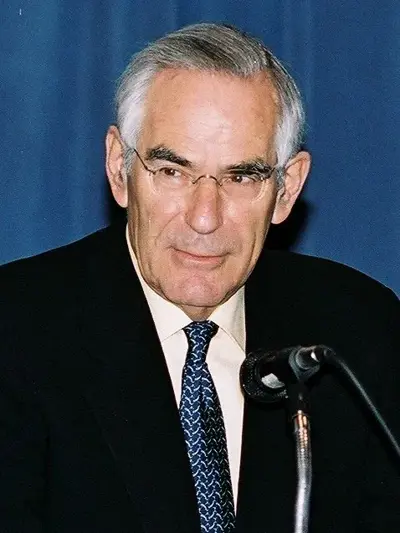
David Halberstam was an American writer, journalist, and historian, known for his work on the Vietnam War, politics, history, the Civil Rights Movement, business, media, American culture, and later, sports journalism. He won a Pulitzer Prize for International Reporting in 1964. Halberstam was killed in a car crash in 2007, while doing research for a book.
