Walt Whitman Rostow Quotes
Whose side are you on, anyway?
The CIA was uncovering evidence that the military (and one of their key operative in Saigon) were lying about the success of the war effort. See {634521}. As the CIA sent their data to the White House, Rostow and others grew very distressed because it cast doubt on the wisdom of the administration’s Vietnam policy, the President would have to admit that his report to the people were wrong, and the anti-war movement would even be more galvanized in their aggressive protests. It is very hard for politicians to face the truth when it contradicts statement and policies they have been making previously. This quotation also illustrates a human frailty—that in a war or other conflict, the bearer of bad news is perceived as being disloyal. In war in a democracy, bad news, strengthens the enemy’s resolve, and weakens public support for the war. So in a bizarre sense, he who carries bad news is hurting the war effort. However, when the truth is not known or is suppressed, the result is even worse as with Vietnam. Telling truth to power is the highest form of loyalty.
Walt Whitman Rostow, Presidential Assistant & National Security Advisor (Democrat), Question asked of CIA Director Richard Helms and other top CIA officials during the Vietnam War, Quoted in Tim Weiner, Legacy of Ashes: The History of the CIA, 2007
Sourced by: Eigen's Political and Historical Quotations

Helms had very bad experience even in hinting at unfavorable news about the Vietnam War. See {634520}. He didn’t even send copies to his own executives, the White House Chief of Staff or the other White House staff like the National Security Advisor who would normally receive copies of top secret memos.

Komer, Wesmoreland, and the Military Command in Vietnam had been lying about American success in the Vietnam War. The CIA analysts (see {634522}) had figured out that if the Westmoreland numbers of enemy killed were correct, there would have been almost no young men left to fight in North Vietnam, and yet their military was as large and strong as ever. The CIA director sent Carver to Saigon to tell Komer and Westmoreland that CIA was about to issue their findings. Komer was an ultra-hawk, known as “Blowtorch Bob”, who had personally sent many memos to the White House reporting that we were winning in Vietnam and the only question was how soon we could attain total victory. For his work in Vietnam, he was made Ambassador to Turkey. He was awarded the Presidential Medal of Freedom by LBJ. Some critics believe that Johnson’s after Vietnam treatment of Komer was to assure his silence as he knew everything about the deception and was a major perpetrator of it. Discipline for lying was out of the question with someone who knew all that Komer did.


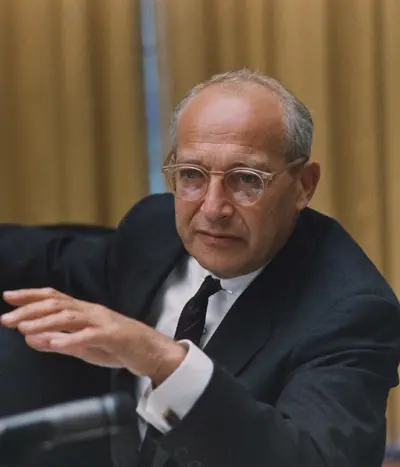
Walt Whitman Rostow (also known as Walt Rostow or W.W. Rostow) OBE was an American economist, professor and political theorist who served as National Security Advisor to President of the United States Lyndon B. Johnson from 1966 to 1969.
